Good value in children’s clothing is surprisingly difficult to judge from the price tag.
A cheap T-shirt can be excellent value if it is comfortable, washes well and gets worn constantly. Another cheap T-shirt can be poor value if it twists after three washes or remains in the drawer because the child dislikes it.
The same applies at the other end of the market. An expensive coat may justify every pound through warmth, waterproofing and years of use, while a premium sweatshirt may offer little beyond a logo.
I have therefore stopped treating price and value as interchangeable.
I Start With How Much Use I Expect
This is the most important part of my calculation.
If a child will wear something several times every week, the garment has plenty of opportunity to justify its cost.
School trousers are a good example. So is an everyday winter coat or a favourite sweatshirt.
I am willing to spend more on those than I am on an outfit bought for one occasion.
That does not mean I automatically choose the expensive version. It means I care more about durability, comfort and performance when the garment will work hard.
I Inspect the Garment Rather Than the Brand
Learning about spotting genuinely good-quality clothes has made me much less influenced by labels.
I feel the fabric.
I look inside.
I inspect seams and fastenings.
I check knees, cuffs, necklines and waistbands.
I ask whether the garment seems appropriate for the amount of wear it is likely to receive.
A famous name may still produce a garment that feels flimsy. A supermarket school trouser may be extremely well constructed.
I want evidence from the product itself.
The Most Expensive Garment Is Not Automatically the Best
Higher prices can reflect many things: better materials, specialist construction, smaller production runs, brand prestige, licensing or marketing.
Some of those may matter to me.
Others may not.
That is why I think explicitly about whether expensive clothes are worth it rather than assuming the answer is either always yes or always no.
If spending £20 more gives me a genuinely waterproof coat instead of a shower-resistant one, that may be worthwhile. If the difference buys only a larger logo, I may decide otherwise.
Wash Performance Is Part of Value
Children’s clothing lives a substantial part of its life in the washing machine.
That means I care about what happens after ten, twenty or fifty washes rather than only how the garment looks when new.
A jumper that stays soft, keeps its shape and retains its colour is providing useful value. A beautiful top that shrinks noticeably or develops heavy pilling quickly is not.
When shopping online, I pay particular attention to repeated customer comments about clothes that survive repeated washing. One negative review means little. A pattern across many reviews makes me pay attention.
I Consider How Quickly the Child Will Outgrow It
Growth changes the value equation.
There is less reason for me to buy an exceptionally expensive fitted garment if I expect the child to wear that size for only a short period.
A coat with sensible growth room may justify a higher price because it could last through more than one season.
An occasion outfit may have almost no growth window at all.
I do not expect to predict growth perfectly. I simply include likely fit duration in the decision.
Cost Per Wear Helps Me Think Clearly
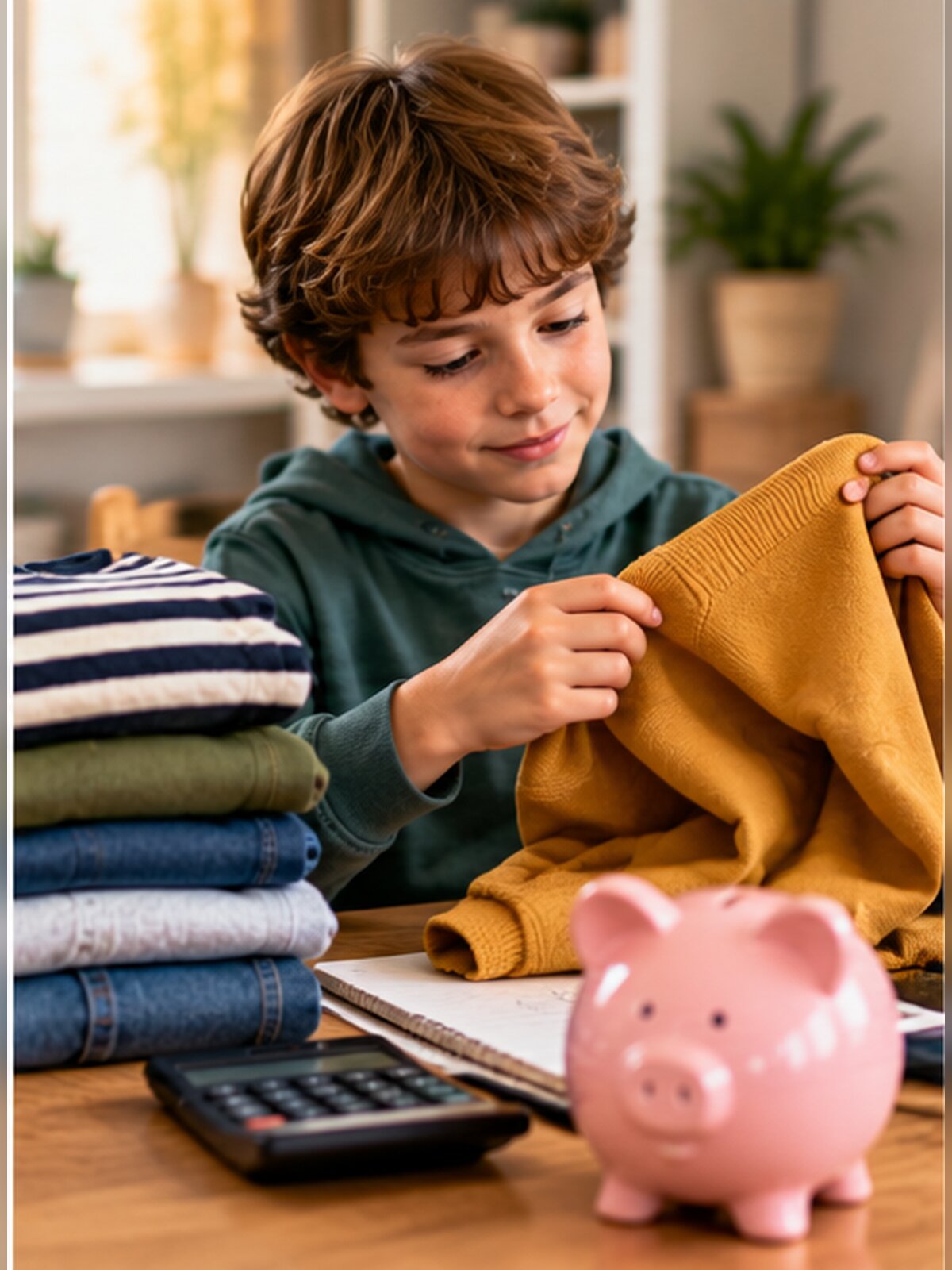
I do not need a spreadsheet for every jumper, but cost per wear is a useful mental test.
Imagine a £60 coat worn 120 times. That works out very differently from a £30 party outfit worn once.
Likewise, a £25 sweatshirt worn twice a week for a year may deliver more value than five £8 tops that the child barely chooses.
This is why cheap clothing can still be expensive in practice.
If it is not used, every pound spent on it is effectively wasted.
Comfort Has Financial Value
This is something I think is often missed.
A garment can be durable, beautifully made and reasonably priced yet still be poor value if the child dislikes wearing it.
Perhaps the fabric feels scratchy.
The waistband is uncomfortable.
The neck is too tight.
The child simply hates the design.
Whatever the reason, an unworn garment has failed financially as well as practically.
I increasingly involve children in purchases for exactly this reason.
I Spend More on Difficult Problems
If a particular clothing need has been difficult to solve, I am willing to pay more when I finally find something that works.
Perhaps the child needs unusually long trousers.
Maybe ordinary seams trigger sensory discomfort.
Perhaps a specialist waterproof coat is needed for outdoor activities.
If the premium gives me better fit or function, I can identify what I am buying.
That is very different from spending more because I assume higher prices equal higher quality.
Basics Often Give Me Opportunities to Save
Simple garments are where I am often happiest to use lower-priced products.
A plain T-shirt does not need to be luxurious. I want acceptable fabric, secure seams and good wash performance.
If a reasonably priced retailer gives me that consistently, I see no need to pay more.
Socks, underwear, leggings and school polo shirts can often fall into the same category.
I reserve larger portions of the budget for garments where construction genuinely becomes more complicated.
Outerwear Is More Complex
Coats combine insulation, weather protection, fastenings, hoods, pockets and movement.
That creates more opportunities for meaningful quality differences.
I am therefore more prepared to spend time and money comparing outerwear than ordinary cotton tops.
A coat that keeps a child dry throughout winter and can later be passed to somebody else may be one of the best-value garments I buy all year.
I Think About Hand-Me-Downs
A garment’s useful life does not necessarily end when the first child outgrows it.
If I have younger children, relatives or friends who may use it later, durability becomes even more valuable.
A robust £40 jumper worn by two children can outperform a cheaper garment that looks exhausted after one.
Even if I do not personally pass clothes down, a garment in good condition may be sold or donated.
Remaining useful life adds value.
Second-Hand Prices Change My Options
Good value does not always mean buying new.
If my budget would buy either a basic new coat or a high-quality used coat, I compare the actual products.
Second-hand shopping can give me access to better construction or specialist brands for less money.
I still inspect condition carefully because a previously expensive garment with very little life remaining may not be a bargain.
The original price no longer matters. Current condition does.
I Include Repairability
A strong garment with one failed button is usually worth repairing.
The same may be true of a small knee hole or loose hem.
If the underlying fabric and construction remain good, simple repairs can extend the value significantly.
I increasingly think of repair as part of ownership rather than evidence that the purchase was a failure.
Children’s clothing has a demanding life. Some maintenance is reasonable.
Sales Can Make Bad Purchases Feel Sensible
Discounts are particularly good at confusing value.
If something was £50 and is now £20, I naturally feel as though I am saving £30.
The more useful question is whether I wanted to spend £20 on the garment at all.
If the child does not need it, dislike it or already owns several similar items, the sale price has not created value.
It has simply lowered the price of an unnecessary purchase.
I Decide the Budget Before Looking at Brands
When possible, I work out what I am comfortable spending before shopping.
That makes how much to spend a household decision rather than something determined by whichever products appear first.
Perhaps I am comfortable paying more for the coat and less for everyday tops.
Another family may prioritise differently.
The important part is that the budget reflects our circumstances rather than an assumption that “good parents” ought to buy a particular quality or brand.
I Review Purchases Afterwards
Over time, the wardrobe provides excellent data.
Which school trousers survived?
Which jumper bobbled immediately?
Which expensive garment was genuinely fantastic?
Which bargain became the child’s favourite?
I remember these results.
Value becomes easier to judge when I use previous purchases as evidence rather than restarting the decision every season.
My Definition of Good Value Is Quite Simple
A garment is good value when the combination of price, use, comfort and durability makes sense for our household.
That could describe a £5 T-shirt.
It could also describe a £100 coat.
I do not need every item to be cheap, and I certainly do not need every item to be premium.
I want the money I spend to translate into clothing the child genuinely uses.
That is the point at which the price stops being the main story.