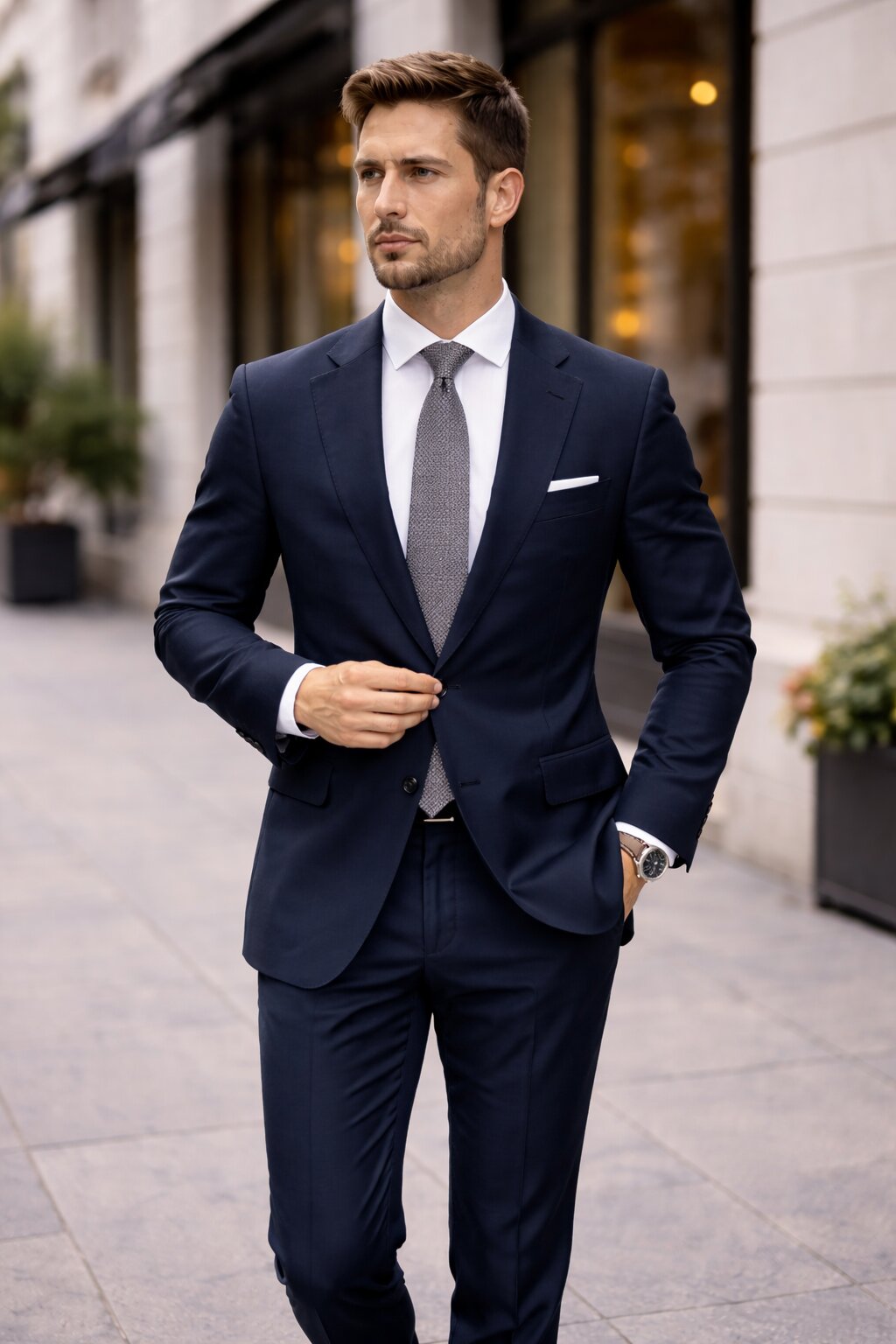
A well-fitting suit can completely transform how a man looks and feels. It adds structure, sharpness and confidence in a way that few other items of clothing can match. On the other hand, a poorly fitting suit can have the opposite effect, making even an expensive piece look awkward or uncomfortable.
Understanding how a suit should fit is not about chasing perfection or following rigid rules. It is about recognising the key areas where fit matters most and knowing how to achieve a balanced, clean silhouette. Once you understand these fundamentals, choosing and wearing a suit becomes much simpler.
This guide takes a detailed look at how a suit should fit, covering each part of the suit and explaining what to look for, what to avoid and how to get it right in practice.
Why Fit Matters More Than Anything
When it comes to suits, fit is far more important than brand or price. A well-fitted suit from an affordable retailer will always look better than an expensive suit that does not sit correctly on the body.
Fit affects:
- Overall silhouette
- Comfort and movement
- How polished the outfit looks
- Confidence when wearing it
A suit should follow the natural shape of your body without feeling tight or restrictive. It should enhance your proportions rather than distort them.
The Suit Jacket: Where Fit Matters Most
The jacket is the most important part of the suit when it comes to fit. If the jacket does not fit properly, the entire outfit will feel off.
Shoulders
The shoulders are the first thing to check, and they are also the hardest to alter. The seam of the jacket should sit exactly at the edge of your natural shoulder. If it extends beyond that point, the jacket will look oversized. If it sits too far in, it will feel tight and restrictive.
A clean shoulder line creates the foundation for the rest of the jacket.
Chest And Button Closure
When the jacket is buttoned, it should sit comfortably across the chest without pulling. There should be no visible strain or tension lines. At the same time, it should not feel loose or baggy.
A good test is whether you can slide a hand inside the jacket comfortably without excess space.
Waist Suppression
A well-fitting jacket should gently taper at the waist, creating a slight shape without being overly tight. This helps create a clean, tailored silhouette.
If the jacket hangs straight down with no shape, it can look boxy. If it is too tight, it will restrict movement and feel uncomfortable.
Jacket Length
The length of the jacket should provide balanced coverage. A common guideline is that it should cover the seat and end around the middle of your hand when your arms are relaxed at your sides.
If the jacket is too short, it can look out of proportion. If it is too long, it can feel outdated and heavy.
Sleeve Length
The sleeves of the jacket should end just above the wrist, allowing a small portion of the shirt cuff to be visible. This detail adds a refined touch and helps create a layered look.
Sleeves that are too long can make the outfit look untidy, while sleeves that are too short can feel awkward.
The Trousers: Clean And Balanced
Suit trousers should complement the jacket and maintain the overall silhouette.
Waist Fit
The waistband should sit comfortably without the need for a belt to hold it in place. It should feel secure but not tight.
A proper waist fit ensures that the trousers sit correctly and maintain their shape throughout the day.
Seat And Rise
The seat of the trousers should follow the natural shape of your body without excess fabric or pulling. Too much fabric can create a baggy appearance, while too little can feel restrictive.
The rise, or the distance from the waistband to the crotch, should feel comfortable and allow natural movement.
Leg Shape
The leg of the trousers should have a clean line from the thigh down to the ankle. Modern suits often feature a slightly tapered leg, which creates a sharper look.
However, the fit should not be overly tight. There should still be enough room for comfort and movement.
Trouser Length And Break
The length of the trousers is often described in terms of the “break,” which refers to how the fabric sits on the shoe.
A slight break is the most versatile option. The trousers should rest lightly on the shoe without excessive bunching.
No break creates a more modern, cropped look, while a full break can feel more traditional.
The Shirt: Supporting The Suit
The shirt plays an important role in how the suit looks overall. It should fit neatly without adding bulk or creating tension.
The collar should sit comfortably around the neck, allowing space for a finger without feeling loose. The sleeves should extend slightly beyond the jacket sleeves, creating a clean, layered appearance.
A well-fitting shirt enhances the overall look without drawing attention away from the suit.
Movement And Comfort
A suit should not only look good when you are standing still, but also when you are moving. You should be able to sit, walk and move your arms comfortably without feeling restricted.
Testing movement is an important part of assessing fit. If the suit feels tight or awkward during normal movement, adjustments may be needed.
Comfort is essential, as it affects how naturally you carry yourself.
Common Fit Mistakes
There are several common mistakes that can affect how a suit looks.
One of the most frequent issues is choosing a size that is too large, often in an attempt to prioritise comfort. This can result in a loose, unstructured appearance. On the other hand, choosing a size that is too small can create tension and restrict movement.
Another common mistake is ignoring the importance of alterations. Off-the-rack suits are rarely perfect, and small adjustments can make a significant difference.
It is also easy to overlook details such as sleeve length or trouser break, but these elements contribute to the overall impression.
The Role Of Tailoring
Tailoring is often the final step in achieving a well-fitting suit. Even minor alterations can transform how a suit looks and feels.
Common adjustments include:
- Shortening sleeves
- Adjusting trouser length
- Taking in the waist
A good tailor can refine the fit while maintaining the integrity of the suit.
Investing in tailoring is one of the most effective ways to improve your overall appearance.
Choosing The Right Style For Your Body
While the basic principles of fit remain the same, different body types may benefit from slightly different approaches.
For example, slimmer fits can create a more modern silhouette, while slightly more relaxed cuts may offer better comfort for some individuals. The key is to find a balance that works for your proportions and personal style.
Understanding your body shape helps in selecting suits that naturally complement your frame.
Building Confidence In A Suit
When a suit fits well, it changes how you carry yourself. You stand a little straighter, move more confidently and feel more at ease.
Confidence comes from knowing that your outfit works. When you no longer have to think about how your suit fits, you can focus on the occasion instead.
Keeping It Simple And Refined
The best-fitting suits do not draw attention to themselves through excessive styling or complicated details. Instead, they rely on clean lines, balanced proportions and subtle refinement.
A well-fitted jacket, properly tailored trousers and a clean shirt are usually all that is needed to create a strong, polished look.
Understanding how a suit should fit gives you the foundation to build outfits that feel both comfortable and confident. Once you get it right, it becomes one of the most reliable and effective ways to dress well.