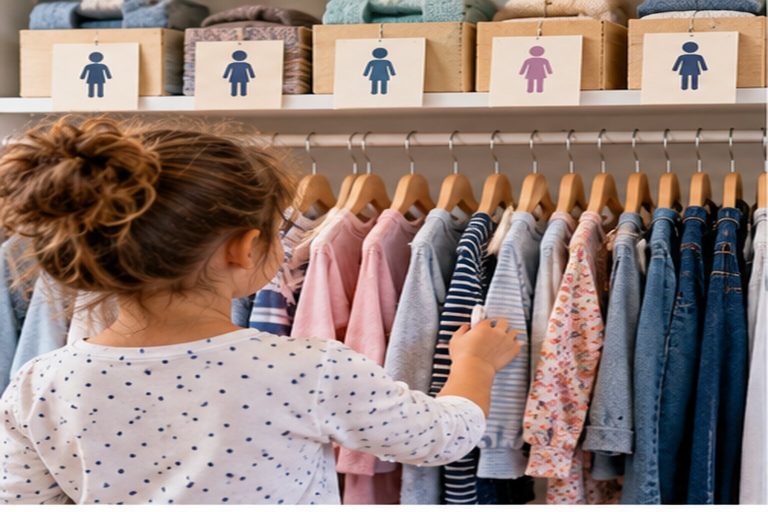
Children’s clothing seems almost designed for the second-hand market.
Children grow quickly.
A coat can become too small while it still looks almost new.
A smart outfit may be worn once.
A school blazer can survive one child with years of useful life still remaining.
So I think second-hand children’s clothing can offer excellent value.
I just do not approach every garment in exactly the same way.
Some items are extremely easy for me to buy used.
Others deserve closer inspection.
I Start With Condition, Not Age
I do not really care whether an item is one year old or five.
I care about the life it has left.
A well-made five-year-old coat may be much more useful than a badly worn garment bought last year.
I inspect the clothing as though I were buying something new, but with additional attention to previous wear.
The key question is simple:
Would I still want this if I did not know it was a bargain?
Coats Can Be Excellent Second-Hand Purchases
Children often outgrow coats before destroying them.
That can make good-quality outerwear particularly attractive second-hand.
I inspect:
the zip;
cuffs;
hood;
lining;
pockets;
seams;
waterproof fabric where relevant.
If the coat is technically waterproof, I remember that water-repellent surface finishes can deteriorate with use.
That does not automatically make the coat unsuitable, but I want realistic expectations.
For an ordinary school coat, second-hand can still be excellent value.
Jumpers and Sweatshirts Are Easy to Assess
These are another category I buy confidently when the condition is good.
I look for:
pilling;
stretched cuffs;
necklines that have lost shape;
stains;
worn elbows.
A sweatshirt with mild fading may still have years of useful casual wear.
I distinguish cosmetic wear from structural failure.
Jeans and Trousers Need More Attention at the Knees
Children’s trousers frequently fail first at the knees.
I hold the fabric up and look carefully.
Is it noticeably thinner?
Has the previous wearer worn through part of the fibres?
I also inspect the crotch and inside thighs.
If the fabric is still robust, used jeans or trousers can be a very sensible purchase.
School Uniform Is One of My Favourite Second-Hand Categories
School uniform is often standardised and relatively durable.
Children may leave a school or outgrow a blazer while it remains completely usable.
That makes second-hand:
blazers;
jumpers;
skirts;
trousers;
sports tops
particularly sensible.
It also gives me an inexpensive way to buy backup clothing.
A spare second-hand blazer kept for emergencies may be far more sensible than buying two new ones.
Occasion Wear Makes Even More Sense
If a dress, shirt or smart jacket was worn once for a wedding, it may reach the second-hand market practically new.
That is exactly the sort of garment where I question the value of buying new.
The next child may also wear it once.
Second-hand allows several families to obtain useful value from the same clothing.
I Am More Selective About Underwear
This is one category where I personally prefer buying new.
The same generally applies to everyday socks unless they are unused.
Other adults may be comfortable making different choices.
For me, underwear is inexpensive enough and worn closely enough to the body that new purchases are simpler.
I Treat Shoes Separately
Footwear has its own fit and wear considerations.
The way a shoe has worn can reflect the previous child’s foot and walking pattern.
That makes me more cautious with heavily used everyday shoes.
Some lightly worn occasion shoes or certain specialist footwear may still be worth considering, but I inspect them much more closely than clothing.
I do not treat shoes as just another second-hand garment.
I Check Elastic Carefully
Elastic can look fine while having lost much of its recovery.
I stretch waistbands gently.
Do they spring back?
Or do they remain loose?
This matters particularly in:
leggings;
joggers;
skirts;
pyjama bottoms.
Replacing failed elastic is possible, but I take that into account when judging value.
I Test Every Fastening
I open and close zips.
I test poppers.
I check buttons.
I inspect buttonholes.
If a zip is already unreliable, the item may still be worth buying if it is cheap and easily repaired.
But I want to know about the problem before I pay.
I Look for Stains in Natural Light
Artificial lighting can hide marks.
I look particularly at:
cuffs;
collars;
knees;
fronts of tops;
underarms.
A faint stain on outdoor play clothes may not bother me.
The same stain on an expensive occasion outfit might.
Condition only makes sense in relation to the garment’s intended use.
I Ask Whether I Can Wash It Properly
For most ordinary children’s clothing, this is straightforward.
I wash second-hand clothing before use according to the care label.
For coats and specialist garments, I check the instructions before buying.
If the item requires expensive professional cleaning, that cost belongs in my value calculation.
I Do Not Need Second-Hand Clothing to Look New
This is important.
If my standard is that used clothing must be indistinguishable from new, I miss much of the point.
A pair of jeans can be slightly faded and still be completely functional.
A play sweatshirt can show light wear.
I care about whether the garment still performs the job I am buying it for.
Children will add their own signs of wear soon enough.
Online Purchases Require Better Descriptions
When I cannot inspect clothing in person, I look for listings with clear photographs and specific condition descriptions.
I want to see:
front;
back;
labels;
cuffs;
knees where relevant;
any defects.
A vague photograph from several metres away gives me very little confidence.
I also include postage costs when comparing value.
A cheap garment with expensive delivery may no longer be especially cheap.
Bundles Can Be Excellent or Terrible Value
Buying a bundle of ten children’s tops can look like a bargain.
It is only a bargain if enough of them are useful.
I ask:
Are they the right size?
Does the child like the styles?
Do we need ten?
Are they all in similar condition?
Sometimes paying more for three carefully chosen used garments is better than acquiring a large bag of clothing I then need to redistribute.
I Love Second-Hand Clothing for Experimenting
If a child suddenly wants to try a very different style, buying used reduces the financial risk.
Perhaps they want:
jeans rather than joggers;
a particular type of jacket;
a more formal style;
a fashion trend they may abandon quickly.
Second-hand allows experimentation without committing as much money.
I Think About Resale When I Buy New Too
Once I started buying second-hand clothes, I became better at recognising which new clothes might have another life later.
I am more likely to care for garments well.
I repair small damage.
I keep complete sets together.
When they are outgrown, I can pass them on or resell them.
That creates a useful cycle.
Children Can Have Feelings About Second-Hand Clothing
Younger children may not care at all.
Older children sometimes do.
I involve them rather than surprising them with something they strongly object to.
I also avoid presenting second-hand clothing as something inferior or embarrassing.
It is simply another way of buying clothes.
In many cases it can give us access to better-quality items than the same budget would allow new.
My Best Second-Hand Buys
The categories I am usually happiest to buy used are:
coats;
jumpers;
hoodies;
jeans;
casual trousers;
school uniform;
occasion clothing;
sportswear in good condition.
I inspect each item rather than assuming all second-hand clothing is equally suitable.
The Real Value Is Remaining Life
That is how I make the decision.
A £5 coat with only a month of useful life left may not be good value.
A £20 coat that another child can wear for two winters may be excellent.
Second-hand pricing tells me what I am paying.
Condition tells me what I am getting.
When those two align, used children’s clothing is one of the easiest ways I know to reduce costs without necessarily reducing quality.
And I like the fact that useful clothes remain useful rather than being discarded simply because their first owner grew.