Style after 60 should feel freeing, not limiting. By this stage of life, many women know far more about what they like, what they dislike, and what they will not tolerate in an uncomfortable outfit. That confidence is a wonderful starting point for dressing well.
The challenge is that fashion advice for women over 60 can sometimes feel outdated. It may focus too much on what to avoid, what to cover, or what is considered “age appropriate”. A better approach is to think about clothes that feel current, flattering, comfortable, and personal. You do not need to dress younger. You also do not need to fade into the background. You simply need a wardrobe that supports the way you live now.
Whether you love relaxed trousers, soft knitwear, midi dresses, elegant coats, comfortable shoes, or a more colourful wardrobe, there are plenty of ways to look stylish over 60 without feeling overdone. The best outfits usually come from a mix of good fit, quality fabrics, thoughtful colour, practical layers, and a few pieces that bring personality.
Choose Current, Not Trend-Led
One of the easiest ways to look stylish over 60 is to aim for current rather than trend-led. There is a difference. Trend-led dressing can feel exhausting because it changes constantly. Current dressing means your clothes feel fresh, but still wearable.
A current wardrobe might include relaxed tailoring, straight-leg or wide-leg trousers, modern knitwear, midi dresses, simple trainers, loafers, good denim, longline coats, and soft shirts. These pieces are not extreme, but they feel up to date because the shapes are clean and the styling is easy.
You do not need to abandon classic pieces. A navy blazer, white shirt, trench coat, cashmere-style knit, or well-cut pair of trousers can still look beautiful. The key is to check the cut. A jacket from fifteen years ago may have a shape that feels dated, even if the idea of the jacket is timeless. Updating the silhouette can make your whole wardrobe feel more modern.
This is where wardrobe essentials become especially useful. A good set of reliable pieces makes everyday dressing easier, but those essentials should still feel like they belong to your life now.
Prioritise Fit And Comfort Together
At any age, fit matters. Over 60, comfort often matters even more, but comfort should not mean giving up on style. The best clothes give you both.
Look for waistbands that sit comfortably, sleeves that allow movement, fabrics that breathe, and shoes that support your feet. Clothes should not pinch, pull, itch, twist, or need constant adjusting. If an outfit only looks good when you stand perfectly still, it is probably not practical enough for real life.
Good fit does not mean tight. In fact, many women look more elegant in clothes that skim rather than cling. A softly tailored trouser, relaxed shirt, fluid dress, or fine knit can look polished while still feeling easy to wear.
It is also worth having alterations done when needed. Shortening trouser hems, adjusting sleeves, taking in a waist, or changing a button can transform an item from nearly right to genuinely useful. Small alterations often make mid-priced clothes look more expensive.
When you understand how to choose clothes that suit you, shopping becomes less frustrating. Instead of asking whether you are allowed to wear something at your age, ask whether the cut, colour, fabric, and fit make you feel good.
Build A Strong Trouser Collection
Trousers are one of the most useful parts of a wardrobe after 60. They can be casual, smart, elegant, practical, and comfortable depending on the fabric and cut. The right trousers also make simple tops look much more intentional.
Straight-leg trousers are a reliable starting point. They work with shirts, knitwear, blouses, tunics, jackets, and trainers. Wide-leg trousers can look very elegant, especially in soft fabric with a neat waistband. Slim trousers can still work beautifully, particularly with longer tops or relaxed layers. Cropped trousers are useful in spring and summer, provided the length feels flattering with your shoes.
If you find trousers difficult, explore the best trousers for different body types rather than buying the same shape repeatedly. Some women need more room through the hip, others need a higher rise, a shorter leg length, a softer waistband, or more drape in the fabric. Once you find your best trouser shapes, they become the backbone of your wardrobe.
A good over-60 trouser wardrobe might include dark straight-leg jeans, tailored wide-leg trousers, relaxed linen trousers, smart black or navy trousers, and a comfortable casual pair for weekends. With those pieces, you can create many outfits from a fairly small number of tops and layers.
Keep Casual Outfits Polished
Casual clothes are often where style becomes less considered, but they are also what many women wear most often. A polished casual wardrobe can make daily dressing feel much better.
The aim is not to dress up all the time. It is to choose casual pieces that still have shape, quality, and intention. A soft striped top with straight jeans. A fine knit with wide-leg trousers. A relaxed shirt with cropped trousers. A midi dress with trainers. A cardigan over a simple column of colour.
These are easy casual outfit ideas for women because they feel comfortable but still look pulled together. The difference is usually in the details: a good neckline, a flattering trouser shape, clean shoes, simple jewellery, and colours that work together.
For weekends, casual weekend wear for ladies might include soft denim, breathable knitwear, relaxed trousers, shirt dresses, lightweight jackets, and comfortable trainers or loafers. Try to avoid keeping your oldest or most tired clothes for casual days. Everyday life deserves good outfits too.
Use Smart Casual As Your Everyday Sweet Spot
For many women over 60, smart casual is the most useful style zone. It works for lunches, shopping trips, travel, family gatherings, appointments, relaxed dinners, and days when you want to feel put together without looking formal.
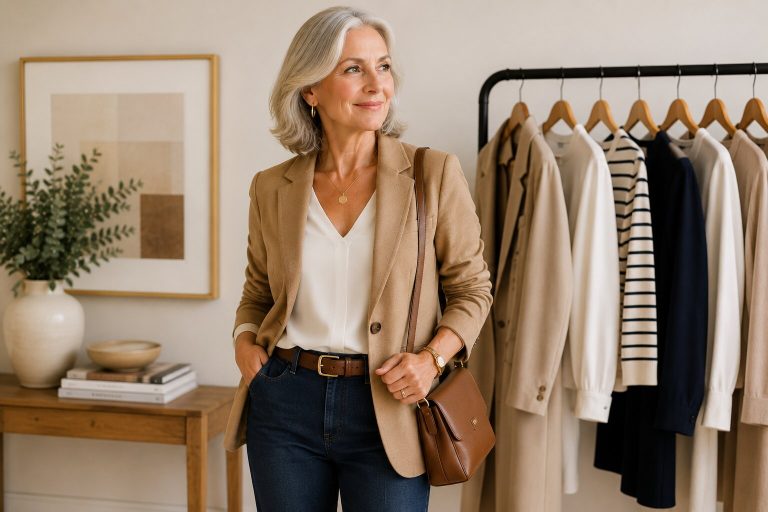
The easiest smart casual outfit ideas for women combine one relaxed item with one polished item. For example, wear tailored trousers with a soft T-shirt, jeans with a blazer, a midi skirt with a fine knit, or a shirt dress with clean trainers. This balance keeps outfits modern.
Layering helps smart casual outfits feel complete. A long cardigan, soft blazer, trench coat, sleeveless waistcoat, or neat jacket can lift simple pieces underneath. You do not need stiff tailoring unless you enjoy it. Softer structure often feels more elegant and easier to wear.
Accessories matter too. A leather belt, simple necklace, structured bag, scarf, or pair of earrings can make an outfit feel finished. You do not need many pieces at once. One or two carefully chosen accessories are usually enough.
Let Dresses Be Easy
Dresses can be incredibly useful over 60, particularly for summer wear, because they remove the need to match separates. The right dress can be comfortable, flattering, and simple to style across different seasons.
Midi dresses are especially practical. They offer coverage without feeling heavy, and they work with many shoe styles. Learning how to style a midi dress can help you get more wear from one piece. Try a midi dress with sandals in summer, trainers for daytime, ankle boots in cooler weather, or a cardigan and belt for an easy layered look.
The combination of midi dress and trainers is particularly good for modern everyday style. It makes a dress feel relaxed rather than formal, and it is comfortable for walking, shopping, travel, or casual lunches. If you are new to trainers and dresses, start with a simple dress and a clean trainer in white, cream, navy, or soft beige.
The best dress shapes are personal. Wrap dresses can define the waist. Shirt dresses look relaxed and polished. A-line dresses add movement. Jersey dresses are practical and soft. Bias-cut dresses can skim beautifully if the fabric has enough weight. Avoid anything that feels too fussy, too tight, or too difficult to care for, unless you truly love wearing it.
Choose Fabrics That Feel Good And Hang Well
Fabric becomes more important with age because it affects both comfort and polish. Thin, clingy fabrics can be unforgiving and may not last well. Very stiff fabrics can feel restrictive. The sweet spot is fabric with enough structure to hold its shape and enough softness to move with you.
Look for cotton, linen blends, viscose, wool blends, silk-style fabrics, ponte, soft denim, jersey with good weight, and fine knitwear. These fabrics can look elegant without being uncomfortable.
Knitwear is especially valuable. A fine merino-style jumper, soft cardigan, relaxed V-neck knit, or knitted jacket can be worn with trousers, jeans, skirts, and dresses. Choose knitwear that skims the body rather than clings tightly. Pay attention to shoulder fit, sleeve length, and neckline.
Better fabric can make simple outfits look expensive. A plain navy jumper in a beautiful texture will often do more for your wardrobe than a heavily detailed top in poor fabric.
Use Colour To Brighten Your Face
Colour can make a huge difference near the face. As hair colour, skin tone, and contrast naturally change over time, the colours that once worked perfectly may not feel as flattering now. This does not mean you have to follow strict colour rules, but it is worth experimenting.
Some women find that softer shades become more flattering: warm ivory instead of stark white, navy instead of black, rose instead of bright pink, teal instead of harsh blue, olive instead of bright green. Others look fantastic in bold colour and should keep wearing it.
If black feels too severe near your face, try breaking it up with a scarf, necklace, open neckline, or lighter layer. Navy, chocolate, charcoal, camel, cream, burgundy, forest green, and soft grey can be beautiful alternatives.
Tonal dressing is also elegant. Cream with beige, navy with denim, grey with silver, olive with khaki, or chocolate with camel can look sophisticated without much effort. Add texture so the outfit does not feel flat.
Keep Shoes Stylish And Practical
Shoes should support your life, but they can still look stylish. Many women over 60 no longer want to tolerate painful heels, slippery soles, or shoes that look good only while sitting down. That is sensible. Fortunately, comfortable footwear has become much more stylish.
Useful shoe options include loafers, ballet flats, ankle boots, low block heels, elegant sandals, and clean trainers. The key is to choose shoes that feel intentional with your outfit. A bulky walking trainer may be perfect for long walks, but a neater fashion trainer may work better with dresses, trousers, and smart casual outfits.
If you wear dresses often, the best dress trainers can make your wardrobe much more wearable. Look for simple shapes, soft colours, and a clean finish. They should complement the dress rather than dominate it.
Shoes also affect proportion. A slightly pointed toe can lengthen the leg. A low block heel can add polish without discomfort. A slim trainer can make a dress feel modern. A loafer can make jeans look smarter. Small changes in footwear can completely change the mood of an outfit.
Refresh Accessories Thoughtfully
Accessories are a simple way to keep outfits feeling current. You do not need to replace everything, but a few updated pieces can make classic clothes look fresher.
A modern bag shape, simple gold or silver jewellery, a beautiful scarf, a good belt, or stylish glasses can all have a big effect. If your clothes are mostly neutral, accessories are also an easy way to add colour.
Scarves deserve special mention because they are practical and expressive. A lightweight scarf can soften a neckline, add colour near the face, or make a simple outfit feel more styled. Pieces such as head wrap scarves for women can also be a stylish option, especially in warmer weather, on holiday, or on days when you want a more creative finishing touch.
Avoid letting accessories become too matchy if that feels dated to you. Shoes and bags do not always have to match exactly. Instead, aim for harmony. Colours, textures, and metals should feel like they belong together, even if they are not identical.
Avoid Dressing By Old Rules
Many women over 60 grew up with strong fashion rules: no trainers with dresses, no long hair after a certain age, no sleeveless tops, no bold colours, no jeans, no shorter jackets, no statement jewellery. Most of these rules are not useful anymore.
Modern style is more flexible. If you like your arms, wear sleeveless tops. If you love jeans, wear them. If you feel good in a leather jacket, keep it. If you enjoy colour, do not give it up. If you want to wear a dress with trainers, that can look chic and practical.
The better question is not “Am I too old for this?” but “Does this work for me?” Fit, fabric, styling, and confidence matter more than age.
That said, not every trend needs your attention. You can skip anything that feels uncomfortable, impractical, or wrong for your personality. Selective modern dressing is often more stylish than trying to follow everything.
Dress For Your Shape, Not Just Your Age
Age-based style advice is only useful up to a point. Body shape, height, proportions, lifestyle, and personal taste matter just as much. A petite woman over 60 may need different styling tricks from a tall woman over 60. A woman with broad shoulders may prefer different necklines from a woman with narrow shoulders. A curvy woman may want different trouser shapes from someone with a straighter figure.
That is why guides such as Fashion Tips For Women With Broad Shoulders and fashion tips for petite women can be helpful alongside age-focused advice. They give more specific ideas about balance and proportion.
The goal is to understand your own body rather than dress according to a generic category. Notice whether you prefer tucked or untucked tops, cropped or long jackets, wide or slim trousers, crew necks or V-necks, prints or solids. These preferences will teach you more than any strict rule.
Create A Few Reliable Outfit Formulas
Outfit formulas make dressing easier. They are not uniforms in a boring sense. They are combinations you know work, which you can repeat with different colours and fabrics.
Try a soft shirt with straight jeans and loafers. A fine knit with wide-leg trousers and trainers. A midi dress with a cardigan and ankle boots. A blazer with a T-shirt and dark denim. A long cardigan with a column of colour underneath. A linen shirt with relaxed trousers and sandals.
Once you have three or four formulas that suit your life, shopping becomes easier too. You can ask whether a new item fits into one of those formulas. If it does not work with anything you already own, it may not be worth buying.
A good formula also helps when packing. For a weekend away, you might take one pair of trousers, one pair of jeans, two tops, a cardigan, a jacket, trainers, and a scarf. Everything should mix together easily.
Shop More Thoughtfully
By 60, many women are less interested in disposable fashion. They want clothes that last, feel good, and earn their place in the wardrobe. That does not mean everything has to be expensive, but it does mean buying with more intention.
Before buying something, ask yourself whether it fits well, whether it works with at least three things you own, whether you can care for it easily, and whether you would want to wear it next year. If the answer is no, it may be a passing temptation rather than a useful addition.
Exploring sustainable fashion stores can be a good way to find more thoughtful pieces, but sustainability can also mean buying less, choosing better fabrics, repairing what you own, and wearing your favourite clothes more often.
A smaller wardrobe full of pieces you genuinely enjoy is far better than a crowded wardrobe full of compromises.
Keep Personality In Your Wardrobe
Practical style does not have to be plain. Your wardrobe should still show who you are. Maybe you love print, elegant neutrals, dramatic jewellery, colourful scarves, red lipstick, denim, soft tailoring, beautiful shoes, or relaxed linen. Keep those details.
The most stylish women over 60 often have a strong sense of self. They are not trying to dress like someone else. They know which colours lift them, which silhouettes feel natural, and which pieces make them smile.
If your wardrobe has become too safe, add one personal detail back in. A patterned scarf. A colourful knit. A statement necklace. A printed dress. A brighter shoe. A jacket in a beautiful texture. Small touches can make practical clothes feel joyful.
At Louie Boutique, we love style advice that helps women feel confident at every stage of life. If you enjoy writing about outfits, personal style, wardrobe confidence, or practical fashion ideas, our Write For Us page is a lovely place to share your voice.
Make Style Feel Enjoyable Again
Fashion over 60 should not be about shrinking yourself. It should be about dressing with ease, confidence, and pleasure. You can be comfortable and stylish. You can be practical and expressive. You can dress in a way that feels modern without chasing every new trend.
Start with fit. Choose fabrics that feel good. Build outfits around reliable trousers, dresses, knitwear, shoes, and layers. Use colour to brighten your face. Keep accessories fresh. Ignore old rules that no longer serve you. Most of all, wear clothes that support the life you are actually living.
A good wardrobe should make you feel more like yourself, not less. When your clothes are comfortable, flattering, and thoughtfully chosen, style becomes less about age and more about confidence.