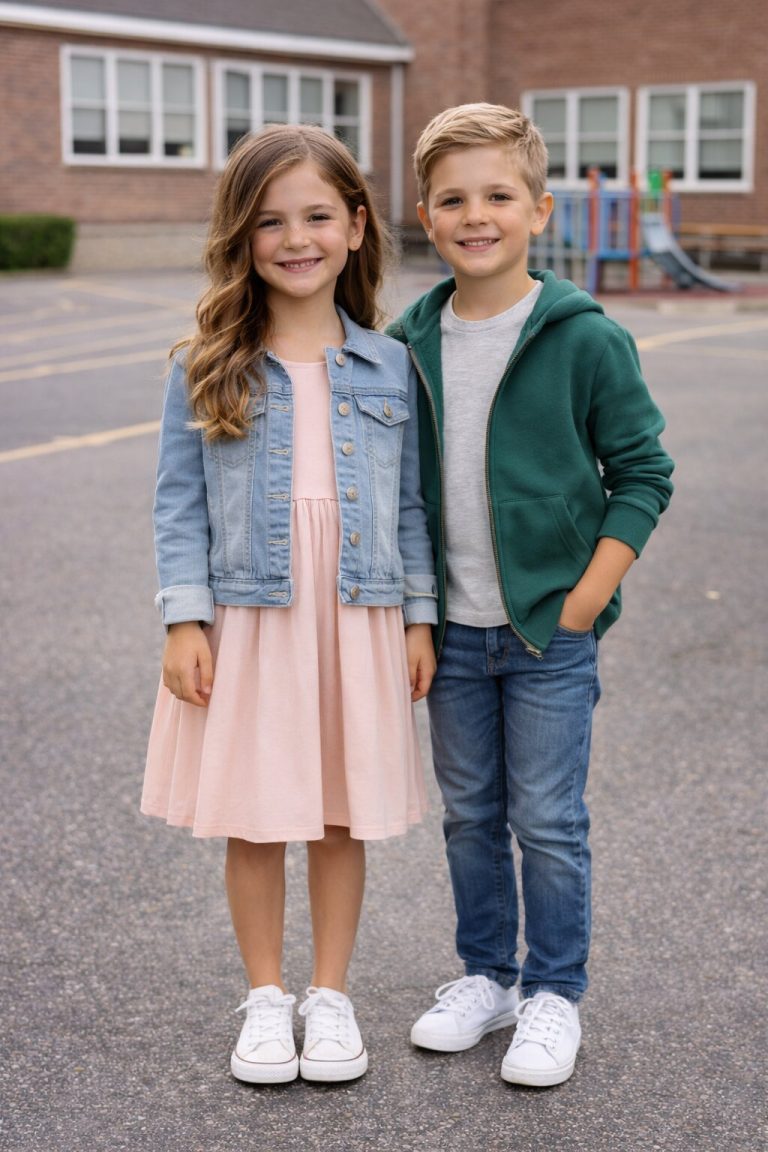
Children’s clothes are small, but the chaos they can generate is strangely impressive.
Tiny cardigans slip off rails. Little dresses end up folded into mysterious heaps. School shirts become mixed up with party outfits, coats get wedged between things that clearly do not belong with them, and somehow a wardrobe that should be simple begins to look as though a miniature storm passed through it. It is one of those domestic situations that sounds trivial until you are standing in front of it, trying to find one particular jumper while several smaller garments slide to the floor in protest.
This is where children’s clothes hangers become more important than people first realise.
A lot of parents make do with whatever is available: spare adult hangers, a handful of supermarket plastic ones, maybe a few random extras that arrived with new outfits and never quite matched anything else. That works up to a point. But children’s clothing is usually much easier to store, protect and organise when it is hung on hangers actually made for children’s sizes.
The best children’s hangers are smaller, lighter and more suitable for little garments. They help clothes keep their shape, make wardrobes easier to manage and reduce the general irritation of items slipping, stretching or vanishing into a wardrobe system that was clearly not designed with small socks and miniature sleeves in mind.
They can also help children become more independent. When clothes are hung neatly at the right height on sensible hangers, it is much easier for children to see what they have, choose outfits and start putting things away properly. Or at least more properly than before, which in family life is often an entirely respectable level of progress.
If you are wondering what kind of hangers are best for children’s clothes, whether plastic, velvet or wooden options are worth it, and how to choose the right style for babies, toddlers or older children, this guide will walk you through it.
Why children need different hangers from adults
It is tempting to assume that a hanger is a hanger and that the only real difference is that children’s clothes happen to be smaller. But size matters quite a lot here.
Adult hangers are usually too wide for children’s garments. This creates a few common problems:
- shoulders can stretch or stick out oddly
- straps may slide off
- smaller tops can lose shape
- outfits look messy on the rail
- wardrobes become harder to organise neatly
A hanger that is too large does not properly support the shape of a child’s item. Instead of helping the garment sit naturally, it can distort it. This is especially noticeable with cardigans, T-shirts, dresses, school shirts and lightweight jackets.
Children’s hangers are designed with narrower shoulders and smaller proportions, which makes them far more suitable for kids’ wardrobes. They keep garments in better shape and make the wardrobe look tidier overall.
There is also a practical point: smaller hangers take up the right amount of space. Adult hangers in a child’s wardrobe often create bulk, crowd the rail and waste room. A properly sized set of children’s hangers makes everything easier to see and easier to reach.
What makes a good children’s clothes hanger?
The best hangers for children’s clothes usually have a few key qualities.
They should be:
- the right size for the child’s clothing
- smooth and gentle on fabric
- strong enough for the garments being hung
- easy to use
- not too bulky for the wardrobe
- shaped in a way that helps clothes stay put
That last point matters more than it sounds. Children’s clothing often includes stretchy necklines, little straps, soft fabrics and lightweight shapes that slip around much more easily than adult tailoring. A good hanger helps prevent this.
It also helps if the hanger suits the kind of wardrobe you are dealing with. A roomy wardrobe in a larger bedroom may allow for sturdier or more decorative hangers. A tightly packed nursery or shared children’s room may need slimmer, more space-saving options.
In other words, the best hanger is not just about the material. It is about the combination of size, shape, grip and practicality.
The main types of children’s hangers
Children’s clothes hangers come in several common styles, and each has strengths depending on what you need.
The main types are:
- plastic children’s hangers
- velvet children’s hangers
- wooden children’s hangers
- padded children’s hangers
- clip hangers for children
- multifunction or shaped hangers
Most families do not need every type under the sun. Usually, one or two main styles plus a few speciality hangers are enough. The key is understanding which ones are best for which clothes.
Plastic children’s hangers: practical and affordable
Plastic hangers are one of the most common choices for children’s wardrobes, and with good reason.
They are:
- lightweight
- affordable
- easy to find
- available in lots of colours and sizes
- usually simple for children to handle
For everyday use, a decent set of children’s plastic hangers can work very well for:
- T-shirts
- tops
- dresses
- school shirts
- cardigans
- lightweight jackets
Because they are light, they are easy to move around and do not put much strain on wardrobe rails. That makes them especially useful in nursery wardrobes, smaller cupboards or wardrobes used by children themselves.
The downside is that quality varies. Some plastic hangers are perfectly sturdy and well shaped. Others are flimsy and not especially helpful. Cheaper versions may bend, snap or have awkward edges that do not support clothes properly.
So plastic hangers can absolutely be one of the best options for children’s wardrobes, but it is worth choosing smoother, better-shaped ones rather than the very thinnest versions that feel temporary before they have even met a cardigan.
Velvet children’s hangers: excellent for delicate or slippery clothes
Velvet hangers are very useful in children’s wardrobes, especially if you are dealing with clothes that like to slide off everything.
That includes:
- dresses with straps
- tops with wider necklines
- party outfits
- silky or softer fabrics
- light cardigans
- outfits that are a bit fiddly to hang neatly
The velvet finish gives grip, which helps keep garments in place. This can make a big difference in a child’s wardrobe, where clothes are often smaller, lighter and more likely to slip.
Velvet children’s hangers are also slim, so they save space. That is helpful in smaller wardrobes or if multiple children are sharing storage. They create a more uniform, tidy look too, which is satisfying for parents and may even reduce the visual feeling of chaos, even when the rest of the room has clearly chosen another path.
The main caution is that very heavy garments may need something sturdier. Velvet hangers are fantastic for many items, but they are not always ideal for bigger winter coats or particularly structured jackets.
Still, for most dresses, blouses, tops and lighter layers, velvet children’s hangers are among the best choices.
Wooden children’s hangers: sturdy and smart
Wooden children’s hangers are often the best option if you want something durable, supportive and attractive.
They work especially well for:
- coats
- blazers
- smarter outfits
- occasionwear
- school uniforms
- heavier jackets
Because they are stronger and more supportive, they help maintain the shape of structured garments much better than lightweight plastic or velvet. They also tend to last well, which makes them a sensible choice if you prefer buying fewer, better things.
Wooden hangers can make a child’s wardrobe look beautifully organised. They are particularly lovely in nurseries, for special occasion wardrobes or in children’s closets where aesthetics matter a little more.
That said, they do take up more space. They are also heavier and sometimes less practical for very small children to handle independently. So while wooden hangers are excellent, they may be best used selectively rather than for absolutely everything.
A mix of wooden hangers for coats and smarter outfits plus slimmer hangers for everyday wear often works very well.
Padded hangers: useful for special pieces
Padded children’s hangers are not essential for every family, but they can be very useful for certain clothes.
They are best for:
- christening outfits
- flower girl dresses
- occasionwear
- delicate fabrics
- sentimental outfits you want to keep nicely stored
The padded shape helps avoid hard shoulder marks and gives a little more gentle support to fragile garments. If you are storing a treasured outfit rather than something destined for the weekly wash and a puddle-related incident, padded hangers can be a very good option.
They are not the most space-efficient, and they are not necessary for daily basics. But for a few special pieces, they can be worth having.
Clip hangers for children: best for skirts, trousers and sets
Children’s clip hangers are particularly useful for bottoms and matching outfits.
They work well for:
- skirts
- trousers
- shorts
- leggings sold as part of a set
- school uniform bottoms
- coordinated outfits
A clip hanger helps keep smaller pieces visible and ready to wear. This is especially useful in school wardrobes where you want to find the right skirt or pair of trousers without excavating a stack of folded things that may or may not be where they started.
Good children’s clip hangers should have grips that are secure but not too harsh. If the clips are too strong or sharp, they can leave marks on softer fabrics. Versions with coated or cushioned grips are usually better.
Clip hangers can also be helpful for hanging full outfits together. For example, a shirt on the hanger and the matching shorts clipped below makes life easier when you are trying to get everyone dressed quickly and with as little negotiation as possible.
Are baby hangers different from children’s hangers?
Yes, and in many cases they should be.
Baby clothes are tiny, soft and very easy to swamp on standard children’s hangers. Baby hangers are usually narrower and lighter still, which makes them more suitable for:
- babygrows
- little jackets
- newborn outfits
- baby dresses
- knitted cardigans
- tiny shirts and rompers
Using oversized hangers for baby clothes can stretch necks and shoulders or simply make the wardrobe harder to manage. Everything ends up looking oddly droopy, as though the garments are already exhausted, which seems unfair given that the baby is probably doing enough of that for everyone.
If you are organising a nursery wardrobe, proper baby hangers are often worth it. They make clothes easier to sort by size and type and help keep smaller items visible rather than lost in folds.
As children get older and clothes become larger and more structured, you can move gradually into toddler and then older-child hanger sizes.
What hangers are best for school uniforms?
School uniforms benefit from slightly more thoughtful storage because they are worn regularly, need to stay easy to find and often include pieces that crease if stuffed into drawers.
The best hangers for school uniforms are usually:
- wooden or sturdy plastic hangers for blazers
- slim plastic or velvet hangers for shirts and jumpers
- clip hangers for skirts or tailored trousers
The key is to keep items accessible and reasonably neat. If uniforms are hung clearly, mornings tend to run more smoothly. Nobody has ever looked back fondly on a school morning made worse by a missing shirt or a wrinkled pinafore discovered thirty seconds before departure.
If your child wears a full set including blazer, shirt and trousers or skirt, it can help to keep at least part of the outfit grouped together in the wardrobe. This saves time and helps children learn where their clothes belong.
What about toddlers and independence?
Once children are old enough to choose some of their own clothes or help put laundry away, hanger choice becomes part of the independence equation.
The best hangers for toddlers and younger children should be:
- light enough to handle
- smooth and safe
- easy to hook and unhook
- not overly bulky
- matched to the wardrobe height if possible
This is where plastic and velvet children’s hangers often shine. They are lighter and easier for little hands than chunky wooden ones. If the wardrobe rail is low enough, a child can begin to recognise outfits, take things down and put them back with some support.
Will this result in boutique-level organisation? Usually not. But it can help children understand their clothes better and participate in simple routines, which is useful in the long run.
What hangers should you avoid for children’s clothes?
The main thing to avoid is using adult wire hangers or oversized adult hangers for children’s garments long term.
Wire hangers are generally too thin and unsupportive. They can distort smaller items and feel awkward to use. Adult hangers, meanwhile, are often too broad and heavy for little clothes.
You should also be cautious with:
- very sharp-edged plastic hangers
- hangers with rough seams
- anything likely to snag delicate fabric
- bulky hangers in very small wardrobes
- overly decorative hangers that are more pretty than practical
There is nothing wrong with wanting the wardrobe to look nice, especially in nurseries or thoughtfully designed children’s rooms. But function matters too. A beautiful hanger that does not actually hold the clothes properly is still a nuisance, just a more photogenic one.
Are matching children’s hangers worth buying?
In many cases, yes.
Matching hangers make a child’s wardrobe:
- look tidier
- feel more organised
- easier to sort by clothing type
- easier to manage visually
This is particularly helpful when you are storing lots of small items. Children’s wardrobes can become messy quickly simply because the garments are smaller and more numerous. Matching hangers help reduce that visual clutter.
They also make hand-me-down systems, size sorting and seasonal wardrobe changes easier. When everything is hung consistently, it is easier to spot what no longer fits, what is missing and what has somehow ended up in the wrong place.
And from a purely practical-parent point of view, opening the wardrobe and seeing neat rows of properly sized hangers is one of those small domestic moments that feels disproportionately calming.
The best hangers for different children’s clothes
Sometimes the clearest way to choose is by garment type.
Best hangers for children’s coats and jackets
Wooden children’s hangers or strong plastic hangers are usually best because they offer more support.
Best hangers for children’s dresses
Velvet hangers are excellent, especially for dresses with straps or softer fabrics. Padded hangers are useful for special occasion dresses.
Best hangers for children’s school shirts
Slim plastic or velvet hangers work well. They are light, practical and easy to manage.
Best hangers for children’s trousers and skirts
Clip hangers are often best, especially for uniforms or coordinated outfits.
Best hangers for baby clothes
Proper baby-sized plastic or velvet hangers are usually ideal because they suit the smaller scale of the garments.
Best hangers for knitwear
As with adult knitwear, some children’s knits are better folded rather than hung, especially heavier ones. Hanging can stretch them over time.
Do you need lots of hanger types?
Not really.
For most families, a good system might be:
- slim plastic or velvet hangers for everyday clothes
- a few wooden hangers for coats and smarter items
- some clip hangers for skirts, trousers or sets
That covers most needs without making wardrobe storage overly complicated.
You do not need a specialist hanger for every sock-adjacent situation. You just need a sensible mix that supports the clothes your child actually wears.
So, what are the best clothes hangers for children?
If you want the practical answer, here it is:
- Velvet children’s hangers are among the best for dresses, tops and everyday items that tend to slip.
- Plastic children’s hangers are a very good affordable choice for general use, especially if they are decent quality.
- Wooden children’s hangers are best for coats, jackets, uniforms and smarter garments.
- Clip hangers are best for trousers, skirts and matching sets.
- Baby-sized hangers are worth using for baby clothes rather than jumping straight to larger children’s ones.
For most households, the best all-round setup is a mix of slim everyday hangers plus a few sturdier specialty ones.
That keeps the wardrobe practical, organised and better suited to the clothes themselves.
And really, that is what good storage should do. It should make life easier, not create yet another small household battle between you, the wardrobe and a tiny cardigan that refuses to stay where it belongs.
When the hangers are right, everything sits better, wardrobes feel calmer and getting children dressed becomes just that little bit less chaotic.
Which, in family life, is a perfectly respectable win.