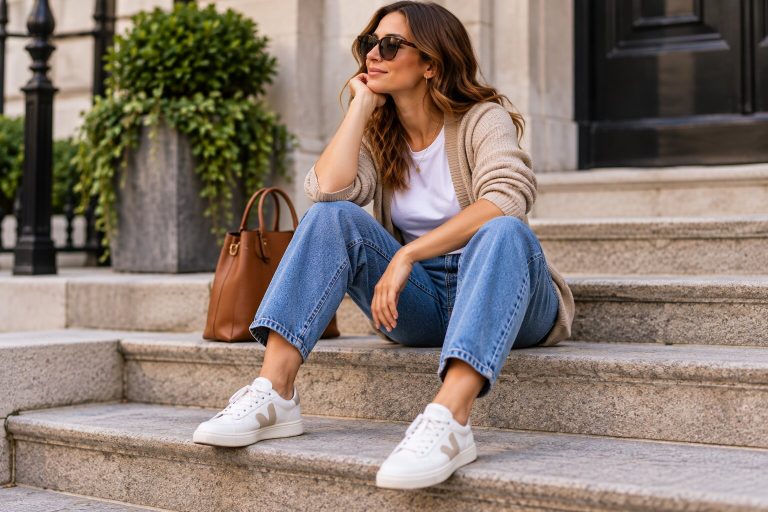
A good pair of jeans can become one of the most useful itemse worn with trainers and a T-shirt, a shirt and loafers, a soft knit and boots, or a blazer and a more polished shoe. Yet denim shopping is often harder than its everyday reputation suggests.
Two pairs carrying the same waist size can fit completely differently. A cut that looks balanced while standing may pinch when sitting. Soft stretch denim can feel comfortable in the changing room but lose its shape after several hours. Rigid denim may feel demanding at first but become increasingly personal with wear. A fashionable wash may look appealing online while the distressing, pocket placement or fabric weight proves impractical in real life.
The most reliable approach is to judge denim in layers. Start with purpose and fit. Then consider fabric composition, weight, stretch, wash, construction and care. Finally, decide whether the price makes sense for the amount of wear the garment is likely to receive.
This order matters. A technically impressive pair of jeans is not a good purchase if it is uncomfortable, unsuitable for your normal shoes or difficult to combine with your wardrobe. Equally, a flattering fitting-room silhouette may not remain flattering if the fabric bags at the knees or the waistband relaxes significantly after one day.
A 2024 Cotton Incorporated consumer survey found that 97 per cent of respondents rated both comfort and fit highly when buying denim. Quality was rated highly by 96 per cent and durability by 93 per cent. Those priorities are a useful reminder that the best denim purchase is not necessarily the newest cut or most recognisable label. It is the pair that fits your body, supports your lifestyle and continues to perform after repeated wear. arch0
Begin With the Job You Need the Denim to Do
Before comparing rises, washes or fibre percentages, decide where the denim will fit into your life.
Are you looking for everyday jeans that can handle walking, commuting and long periods of sitting? Do you need a darker pair for smart-casual outfits? Are you replacing a summer-weight style, adding a looser silhouette or looking for one dependable pair to anchor a small wardrobe?
The answer changes what “good” means.
Everyday jeans may need comfortable pockets, easy movement and a fabric that can tolerate frequent wear. Smarter denim usually benefits from a clean finish, limited distressing and a wash that works with jackets, knitwear and polished shoes. A pair intended for travel should remain comfortable after hours of sitting and work with more than one shoe. A fashion-led wide leg may create exactly the silhouette you want, but it also needs the correct hem and enough wardrobe support to justify the purchase.
Write a short requirement list before shopping. It might include:
- Comfortable for a full working day
- Suitable with trainers and ankle boots
- Dark enough for smart-casual outfits
- Mid- or high-rise
- Full-length rather than cropped
- Machine washable
- Minimal distressing
- Enough room through the thigh
This prevents attractive but irrelevant pairs from taking over the decision.
It also connects with the 3-3-3 rule in fashion. Denim earns its place in a small outfit system when it works with several existing tops and shoes. If a new pair needs an entirely different set of proportions, colours and footwear, it may be a style experiment rather than a versatile foundation. That is not automatically a bad purchase, but it should be recognised as such.
Remember That Denim and Jeans Are Not Exactly the Same Thing
Denim is the fabric. Jeans are the garment most closely associated with it.
Traditional denim is a woven twill fabric, commonly made with indigo-dyed warp yarns and lighter undyed or differently dyed filling yarns. This construction contributes to the familiar contrast between the darker outer face and lighter reverse. CottonWorks explains that numerical descriptions such as 3-by-1 twill refer to how warp yarns interlace with filling yarns. every pair of blue five-pocket trousers is made from classic denim, and denim is also used for jackets, shirts, skirts, dresses and accessories. Some modern “jeans” contain substantial amounts of polyester, man-made cellulosic fibres or elastane alongside cotton. Others use knitted fabrics designed to resemble denim while feeling closer to leggings.
This distinction matters because the word denim does not guarantee one weight, fibre content or wearing experience. Read the composition label and feel the fabric rather than relying on the product name.
Fit Should Be Judged in Motion, Not Only in the Mirror
A fitting-room mirror captures a few seconds of standing. Jeans have to survive sitting, bending, walking, climbing stairs and wearing a belt or coat.
Try the jeans on with the type of underwear you normally wear. Use the shoes you expect to pair with them whenever possible. Then move.
Sit on a chair or bench. Bend to tie a shoe. Walk around the fitting area. Raise one knee. Put your hands in the pockets. Check whether the waistband rolls, the zip area pulls or the fabric cuts into the back of the knees.
A good fit does not have to be tight. It should feel secure where you want structure and allow movement where your body needs space.
Check the Waistband
The waistband should sit in the intended position without being held up entirely by a belt. It should not dig sharply into the stomach, stand far away from the lower back or slide down with a few steps.
A small amount of room may be appropriate in rigid denim because the fabric can relax with wear. Stretch denim may also loosen during the day, but the degree varies greatly. Do not buy an uncomfortably small size based on a promise that every pair will stretch perfectly.
Look at the waistband from the side and back. A pronounced gap may indicate that the difference between the waist and hip measurements is not well served by that particular pattern. A different curve, rise or brand may solve the problem more effectively than sizing down.
Waistband comfort also changes when sitting. A high rise that feels supportive while standing can press against the ribs or stomach in a chair. A low rise may feel fine until bending causes it to slip. Test the posture that occupies most of your day.
Check the Rise
Rise describes the distance from the crotch seam to the top of the waistband, but the practical effect is where the jeans sit on the torso.
Low-rise jeans sit lower on the hips. Mid-rise styles generally sit between the hips and natural waist. High-rise jeans reach closer to or above the natural waist. Retailer descriptions are not perfectly standardised, so compare the actual garment rather than assuming every “high rise” will land in the same place.
The right rise depends on comfort, torso length, preferred proportions and what you wear on top. A high rise can work well with tucked shirts, cropped knitwear and shorter jackets. A mid rise may feel more neutral beneath longer tops. A lower rise can create a longer-looking torso and may suit people who dislike pressure at the waist.
Check the front and back rise separately. A pair may have enough height at the front but feel too low when sitting, or it may contain more back rise than you need and form excess fabric above the seat.
Check the Crotch
The crotch should not pull into a pronounced horizontal smile shape, collapse into excessive folds or feel as though it is restricting each step.
Tension lines across the front can mean the jeans are too small, too short in the rise or cut differently from your body. Excess fabric can mean the rise is too long, the size is too large or the pattern shape is not right.
Do not assume every crotch issue can be fixed by changing one size. A larger size may solve tension but create a loose waist; a smaller size may reduce folds but restrict the hips. The pattern itself may be the problem.
Check the Hips and Seat
The fabric should follow the seat without flattening it through extreme tension or hanging in loose folds unless the cut is intentionally relaxed.
Look at the yoke—the V-shaped or straight section across the back above the pockets. Its angle contributes to how the jeans shape the seat. Pocket size, spacing, height and tilt also affect the appearance considerably.
Small, widely spaced pockets can emphasise width. Large pockets may visually reduce or flatten the area. High pockets can create a lifted effect, while low pockets can make the seat appear longer. These are visual effects rather than rules about what anyone should disguise. Choose the placement that produces the look you prefer.
Check whether the pocket opening gapes and whether decorative stitching is secure. Sit down with a phone or wallet in the pocket if that is how you normally use your jeans.
Check the Thigh and Knee
Jeans that fit the waist but pull tightly across the thigh may twist, ride up or become uncomfortable while walking. Look for horizontal drag lines, strained side seams and pocket openings that are pulled out of shape.
People with a larger difference between waist and thigh measurements may benefit from curvy, athletic or relaxed-thigh cuts. These are pattern categories, not body judgements. They simply allocate fabric differently.
Bend the knee and sit. Rigid denim needs enough room for movement because it does not extend like high-stretch fabric. Very stretchy denim can feel unrestricted initially, but check whether it turns visibly thin or shiny over areas of high tension.
Check the Calf and Ankle
A straight leg should fall with a reasonably continuous line rather than catching tightly on the calf. A tapered style should narrow intentionally. A skinny jean should fit close without causing painful pressure or preventing the hem from passing comfortably over the foot.
Bootcut and flare shapes need enough room to fall over the intended footwear. Try them with the relevant boot or heel. A flare that looks balanced with a platform may pool awkwardly with a flat trainer.
Check the Side Seams
Side seams should generally travel cleanly down the leg. Severe twisting can indicate poor grain alignment, fabric torque, uneven finishing or a shape that is being pulled away from its intended position by fit tension.
A small degree of twisting is not always a sign of failure, particularly in certain rigid or vintage-style denims, but obvious spiralling in a new pair deserves attention. Check both legs from front and back.
Understand the Main Jean Cuts
Cut names are useful shorthand, but they are not universal measurements. One brand’s straight jean can resemble another brand’s slim or relaxed style.
Use the label to narrow the search, then judge the actual shape.
Skinny Jeans
Skinny jeans fit close from hip to ankle and usually rely on stretch for movement. They work easily with long tops, oversized knitwear, tall boots and some streamlined jackets.
Look for strong recovery. The fabric should return towards its original shape after you bend the knee or pull it gently. If it remains visibly distorted after a few seconds in the fitting room, it may bag during wear.
Slim Jeans
Slim jeans sit close through the hip and thigh but usually provide more room below the knee than a skinny cut. They can offer a neat silhouette without feeling fully skin-tight.
Check whether the calf catches the fabric, as this can make a slim leg bunch at the knee.
Straight-Leg Jeans
Straight jeans maintain a relatively consistent width from the knee towards the hem, although the exact degree of straightness varies.
They are useful because they work with many shoe shapes and can move between casual and smart-casual outfits. Check the hem opening: a narrow straight may behave like a slim jean, while a wide straight can feel closer to a relaxed cut.
Relaxed and Boyfriend Jeans
These styles provide more room through the hip, thigh or leg. “Boyfriend” is a marketing term rather than a technical standard and may describe anything from a slightly slouchy straight jean to a low-slung, heavily relaxed cut.
Look for intentional ease. The jeans should appear relaxed rather than simply too large at the waistband or crotch.
Mom Jeans
The term commonly refers to a higher rise, room through the hip and thigh, and a tapered or narrower ankle. Again, the exact pattern varies.
Check the front rise and pocket placement carefully, as these influence whether the volume looks balanced on your body.
Wide-Leg Jeans
Wide-leg denim creates volume from the hip or upper thigh downwards. It can feel dramatic, tailored or relaxed depending on the fabric and wash.
The waistband and upper hip fit are especially important because excess volume below makes slippage more noticeable. Check the hem with real footwear and consider whether the fabric is fluid enough to move or structured enough to hold the intended line.
Bootcut and Flared Jeans
Bootcut jeans widen moderately below the knee, while flares create a more obvious expansion.
The knee break should sit close to your actual knee. If it begins too high or too low, the leg can look oddly proportioned. Petite, regular and tall versions may alter more than inseam length; the position of the knee shaping may also differ.
Barrel and Horseshoe Jeans
These shapes curve outward through the leg and narrow again towards the ankle. They rely on deliberate volume and seam placement.
Judge them as a design rather than trying to make them behave like straight jeans. The question is whether the curve sits where intended and works with your tops and shoes.
Choose the Rise and Leg Shape as a Combination
A rise cannot be judged independently from the leg.
High-rise skinny jeans create a very different proportion from high-rise wide-leg denim. A low-rise straight jean behaves differently from a low-rise flare. The same tucked shirt may feel balanced with one and overemphasised with another.
When trying a new silhouette, take at least one top you already own into the fitting room. Try it tucked, untucked and partially tucked if those are realistic styling options. Add a jacket if possible.
This is where sandwich dressing can help. A top and shoe in related colours can frame a new denim shape and make the proportions easier to assess. White knitwear and white trainers around dark wide-leg jeans, for example, create a clear vertical relationship while the denim remains the central feature.
Read the Fibre-Content Label
The fibre label gives important clues about how the denim may feel and behave.
US labelling rules, for example, require most textile products to disclose the generic names and percentages by weight of constituent fibres, along with other identifying information. Similar disclosure systems operate in many markets, although exact legal requirements differ. The practical point for shoppers is simple: the composition label is there to be read. One Hundred Per Cent Cotton
Traditional rigid jeans are often made from 100 per cent cotton denim.
They usually feel more structured, show wear patterns clearly and contain no elastane to provide stretch. Comfort depends heavily on the cut. A good rigid jean includes enough room at the waist, hip, thigh and knee for movement.
Rigid denim may soften and relax with wear, but it should not be bought painfully tight in the hope that discomfort will disappear. Shrinkage and growth vary with yarn, weave, finishing and care.
One hundred per cent cotton does not automatically mean heavy, durable or premium. Cotton denim can be light or substantial, tightly or loosely woven, carefully or poorly constructed. Fibre percentage is one clue, not a complete quality grade.
Cotton With Elastane
A small amount of elastane, spandex or Lycra can add flexibility and help close-fitting jeans move with the body.
The percentage alone does not tell you the full stretch level because yarn construction, fabric design and finishing also matter. Two pairs containing one per cent elastane can feel different.
Check recovery by stretching a hidden area gently and observing whether it returns. Wear the jeans for several minutes, sit repeatedly and look for early bagging at the knee or seat.
Elastane can be sensitive to excessive heat, so care instructions matter. A comfortable stretch jean may have a shorter useful life if repeatedly tumble dried at unsuitable temperatures.
Cotton With Polyester
Polyester may be included for strength, dimensional stability, quick drying or fabric performance. It can also change the hand feel, breathability, fading and repairability of the denim.
Do not treat polyester content as automatically good or bad. Assess the finished fabric. Does it feel pleasant against the skin? Does it recover well? Is it likely to suit the climate and purpose?
Cotton With Lyocell, Modal or Viscose
Man-made cellulosic fibres can make denim feel softer, smoother or more fluid. They are often used in draped wide-leg jeans, lightweight denim and soft close-fitting styles.
A soft hand in the shop can be appealing, but check whether the fabric holds the silhouette you want. A very fluid denim may not produce the crisp structure expected from a barrel, raw or traditional straight jean.
Care requirements can also differ, so read the label rather than assuming all cotton-rich denim can share the same wash and drying routine.
Recycled Fibres
Recycled cotton or polyester may reduce reliance on some virgin inputs, but the percentage and source matter. Mechanically recycled cotton fibres are generally shortened during recycling and may need to be blended with other fibres to achieve the required yarn and fabric performance. Textile Exchange’s technical guidance treats recycled-cotton yarn strength, hairiness and pilling as properties that need testing rather than assuming recycled content guarantees identical performance. ecycled-content claim is therefore one part of the decision. Look for the actual percentage, credible certification where relevant, good construction and a garment you will wear for a long time.
Decide How Much Stretch You Actually Want
Stretch is not simply a comfort upgrade. It changes how jeans fit, age and need to be sized.
High-stretch denim can be useful for close cuts, long periods of sitting, body changes and anyone who values unrestricted movement. Lower-stretch or rigid denim provides more structure and often develops more visible wear patterns.
Ask yourself:
- Do I want the jeans to hold a crisp shape or follow the body closely?
- Will I wear them for long seated periods?
- Do I dislike pressure at the waist and knees?
- Am I prepared for a firmer break-in period?
- Do I want pronounced fading and creasing?
- How often will I wash and tumble dry them?
Do not assume more stretch means more comfort in every situation. Very stretchy jeans can feel hot, cling to the skin or require frequent washing if they rely on a tight fit. Poor recovery can create sagging even when the initial fit is excellent.
Natural mechanical stretch also exists. Cotton Incorporated describes a cotton construction capable of approximately 10 to 18 per cent filling-direction stretch without elastomeric yarns, illustrating that movement can be engineered through weave and finishing as well as elastane. This is a textile technology example rather than a promise applying to ordinary 100 per cent cotton jeans, but it demonstrates why fibre percentage alone cannot predict flexibility. Look at Denim Weight
Denim weight is usually expressed in ounces per square yard, although grams per square metre may also be used.
CottonWorks states that finished denim can range from about 3.5 to 16.5 ounces per square yard. Fabrics used for trousers, jeans and jackets commonly fall between approximately 8 and 16.5 ounces, while lighter weights are often used for shirts and tops. ail product pages do not always state weight, but the information is useful when available.
Lightweight Denim
Lighter denim can feel breathable, flexible and comfortable in warm weather. It works well for shirts, dresses, wide legs and soft summer jeans.
Check transparency, pocket show-through and whether the fabric collapses in a way that suits the cut. Lightweight denim may wear more quickly at high-friction areas if the fabric and construction are not strong enough for the intended use.
Midweight Denim
Midweight fabric is a practical everyday choice. It can provide enough structure for familiar jean shapes without feeling excessively stiff.
This category covers a broad range, so compare pairs directly rather than relying on the label “midweight”.
Heavyweight Denim
Heavy denim can feel substantial, structured and durable, but weight alone does not guarantee quality. It may require a break-in period and can be uncomfortable in warm conditions or during long seated days.
Check whether the cut provides enough movement. A heavy rigid skinny jean would be far less forgiving than a relaxed straight cut in the same weight.
Examine the Weave and Surface
Classic denim often uses a twill weave, visible as diagonal lines on the surface. Right-hand, left-hand and broken twills can create different visual and wearing characteristics.
You do not need textile expertise to inspect the fabric. Hold it near a window or bright light and look for:
- Even weaving
- Unexpected thin areas
- Snags or pulled yarns
- Slubs that appear intentional rather than damaged
- Surface pilling before wear
- Uneven stretch
- Visible twisting
- Shade differences between panels
Some denim deliberately uses slub yarns, irregular texture or nep effects to create character. The question is whether the variation is consistent with the design.
Rub the fabric gently between the fingers. Does it feel dense and stable, soft and fluid, dry and papery, or slick and stretchy? None of these is universally best, but the hand should suit the silhouette and your comfort.
Understand Washes and Finishes
The “wash” describes much of the denim’s colour and surface treatment. It can also affect softness, strength, care and how easily the jeans combine with other clothes.
Raw or Unwashed Denim
Raw denim has received little or no garment washing after dyeing and construction. It is often dark, crisp and capable of developing wear patterns that reflect the owner’s movement.
It may transfer dye, feel stiff and require more considered sizing and care. Not all raw denim behaves identically, and some is sanforized or otherwise treated to reduce shrinkage while other versions may shrink more noticeably.
Buy raw denim only when you are interested in the wearing process. It is not automatically more authentic or superior for every wardrobe.
Rinse Wash
A rinse removes some excess dye and stiffness while preserving a dark, clean appearance. It can be an accessible choice for smart-casual outfits because it offers dark colour without the full demands of raw denim.
Dark Wash
Dark indigo and deep blue jeans usually appear cleaner and slightly more formal than heavily faded pairs. They work well with blazers, shirts, loafers, boots and knitwear.
Check dye transfer and follow the care label. Dark denim may release colour onto pale upholstery, shoes or bags, particularly when new.
Mid Wash
Mid-blue denim is easy to wear casually and often displays enough variation to feel relaxed without looking heavily distressed.
It is a strong choice for a capsule wardrobe because it works with white, cream, black, navy, brown, green, burgundy and many brighter colours.
Light Wash
Light denim creates a softer, more casual effect. It can feel particularly suitable in spring and summer but also works in winter with dark knitwear and boots.
Check whether whiskering and fading sit naturally on your body. Pre-made fade lines that do not align with the hip or knee can look artificial.
Black and Grey Denim
True black denim can look polished, but many pairs fade towards charcoal over time. Decide whether you will enjoy that ageing.
Look for consistent colour across panels and check whether the surface already shows white stress marks at seams. Washed black and grey denim can be easier to combine casually because future fading feels part of the design.
Coloured and Ecru Denim
White, cream, ecru, brown, green and burgundy denim can be useful, but check opacity, pocket bags and dye consistency.
Pale denim should be tried in natural light. Dark underwear, pocket linings and seam allowances may show through a lightweight fabric.
Treat Distressing as Structural, Not Merely Decorative
Rips, abrasions, whiskering, sanding, frayed hems and patched holes change more than appearance. They can reduce the amount of intact fabric in high-stress areas.
Inspect distressed jeans from the inside. Is a rip reinforced with a backing or left completely open? Is fraying already spreading into a seam? Are abrasions placed directly over the knee, pocket corner or inner thigh where further wear is likely?
A decorative hole may grow with movement and washing. Buy it only if you are comfortable with the jeans changing.
Artificial whiskers and faded thigh areas should align plausibly with your body. If the pre-set crease falls well below the hip or across the wrong part of the leg, it can disrupt the fit visually.
Inspect the Construction
Good construction does not require decorative complexity. It requires secure seams, consistent stitching and appropriate reinforcement.
CottonWorks notes that jeans involve numerous cut pieces and assembly stages, including shade matching, waistband construction, belt-loop attachment, buttonholes, rivets and pocket operations. n the jeans inside out and check the following.
Seams
Stitching should be reasonably even, without long loose loops, skipped stitches or thread ends that unravel when gently touched.
Inspect the inseam, outseam, crotch curve and yoke. These areas take regular stress. Seams should lie cleanly without puckering unless puckering is part of a deliberate washed effect.
A chain-stitched hem or flat-felled seam can be a desirable traditional detail, but stitch type alone does not guarantee durability. Execution matters more than marketing language.
Bar Tacks
Bar tacks are dense groups of stitches used to reinforce stress points such as pocket openings, belt loops and the base of the fly.
Check that they are centred, complete and not cutting into already weakened fabric.
Rivets
Rivets traditionally reinforce pocket corners. Modern rivets may also be decorative. They should sit securely without sharp edges, loose caps or fabric tearing around them. CottonWorks describes rivet placement and metal cap buttons as specified construction operations, not random decoration. Belt Loops
Pull each loop very gently. Both ends should be securely stitched. Check that the number and spacing will support the belts you use.
A wide centre-back loop can help control waistband movement, while poorly positioned loops may allow a belt to ride above the waistband.
Fly and Fastening
Zip the fly several times. It should run smoothly without catching the fabric. Check that the zip lies flat when closed and that the top button is secure.
Button-fly jeans take longer to open but can provide a traditional look and simple repairable hardware. The decision is personal; neither system is automatically better.
Pockets
Check pocket-bag fabric, depth and stitching. Very shallow front pockets may be a daily frustration. Thin pocket bags can tear even when the main denim remains strong.
Place your usual phone, keys or wallet inside and sit down. Comfort and security matter more than how useful the pockets appear on the hanger.
Hem
The hem should be even unless intentionally asymmetric or distressed. Look for skipped stitches and check whether the fabric is already fraying above the stitch line.
If you expect alterations, consider how shortening will affect the flare, taper, distressing and original hem finish.
Check Shade Matching and Symmetry
Denim panels can vary in shade because indigo-dyed fabric has natural and manufactured variation. Some variation is desirable, but unexpected differences between the left and right leg, waistband and body, or front and back panels may indicate poor shade matching.
Compare:
- Left and right legs
- Front pocket pieces
- Back pockets
- Waistband sections
- Fly pieces
- Yoke panels
Then check symmetry. Are pockets at the same height? Are belt loops evenly placed? Does one leg appear longer? Does the fly sit centrally? Is one side seam more twisted?
Perfect mathematical symmetry is not essential in a soft garment, but obvious errors can become more noticeable after washing.
Do Not Assume Price Guarantees Quality
Price can reflect brand position, design, marketing, labour, fabric, country of production, retail costs, scarcity and finishing. It does not provide a simple durability score.
An expensive pair may use excellent denim and skilled construction, but it may also be intentionally delicate, highly distressed or priced partly for its label. A less expensive pair may fit well and perform reliably.
Judge the individual garment.
Ask what the higher price is buying:
- Better fabric?
- More complex pattern cutting?
- Stronger construction?
- Transparent labour standards?
- Specialist finishing?
- Repairs or aftercare?
- A cut unavailable elsewhere?
- Resale value?
Then decide whether those qualities matter to you.
Cost per wear can be a helpful estimate. A £120 pair worn 150 times costs less per wear than a £40 pair worn five times. However, the calculation only works if the jeans are genuinely comfortable and useful.
Treat Sustainability Claims Carefully
No pair of newly produced jeans is impact-free. Cotton cultivation, fibre production, spinning, dyeing, weaving, garment finishing, transport, retail and consumer care all have effects.
Levi Strauss & Co.’s lifecycle assessment of a pair of 501 jeans estimated about 3,800 litres of water across the studied product life cycle. Its findings also showed that consumer washing habits materially changed the use-phase impact. The number should not be treated as a universal footprint for every pair of jeans, because materials, locations, factories, methods and care patterns differ, but it demonstrates why broad “eco denim” language needs evidence. n a product makes an environmental claim, look for specifics:
- The percentage of recycled or certified material
- The standard or certification named
- Whether the claim covers fibre, dyeing, finishing or the whole garment
- Whether water or energy savings are measured against a stated baseline
- Whether repair, resale or take-back services are genuinely available
- Whether durability has been tested
- Whether the brand explains who made the garment and where
Words such as conscious, responsible, green and sustainable are too broad on their own.
The most dependable personal contribution is often to buy a pair that fits, wear it repeatedly, care for it appropriately and repair it when practical. Levi’s LCA estimated that wearing jeans ten times before washing could substantially reduce consumer-care water and climate impacts within its model, although actual hygiene and wash frequency should always reflect how the garment is used. detailed tips on caring for your clothes guide explains how to wash, dry, store and repair denim without turning low-frequency washing into a rigid rule.
Consider Second-Hand Denim
Denim often performs well in the second-hand market because it is easy to inspect and may already reveal how it changes with wear.
Used jeans can offer:
- Softer broken-in fabric
- Discontinued cuts
- Older heavier denim
- Lower purchase cost
- Reduced demand for a newly manufactured garment
- Visible evidence of fading and recovery
Inspect the inner thighs, crotch, seat, pocket corners, hems and zip. Hold high-friction areas towards the light to find thinning before it becomes a hole.
Check alterations. A shortened hem, taken-in waist or narrowed leg may improve the garment for one owner but change the fit for you. Compare actual measurements rather than relying on the tagged size, especially with vintage denim.
Odour, mould, degraded elastane and deeply set stains can be difficult to correct. Buy based on condition as well as style.
Take Measurements From Jeans You Already Like
Body measurements are useful, but garment measurements can be even more practical when replacing a familiar fit.
Lay a well-fitting pair flat without stretching it and record:
- Waistband across
- Front rise
- Back rise
- Hip across at a consistent point
- Thigh width below the crotch
- Knee width
- Hem opening
- Inseam
- Full outside length
Compare the measurement method used by the retailer, as brands do not always measure at the same points.
Remember that a rigid pair and highly stretchy pair with identical flat measurements may fit differently. Fabric behaviour must be considered alongside dimensions.
Online reviews can help identify consistent issues such as small waist sizing, short inseams or heavy fabric, but individual fit comments are not universal. Look for patterns across many reviews rather than one person declaring the jeans perfect or terrible.
Try More Than One Size
The size on the label is a starting point, not a verdict about your body.
Try the likely size, one above and one below when possible. Compare where each changes. The larger size may improve the thigh but create a waist gap; the smaller may secure the waistband but pull at the crotch. That information tells you whether a different size or a different cut is needed.
Do not buy a size because you prefer the number. Clothing sizes vary between brands, cuts, production runs and markets. The useful size is the one that produces the intended fit.
Check the retailer’s return terms before wearing denim for an extended home trial. Keep tags attached and protect the garment while deciding.
Think About Alterations Before Buying
Denim can be altered, but some changes are simpler than others.
Common alterations include:
- Shortening the hem
- Preserving or recreating an original hem
- Taking in the waist
- Adjusting the centre-back seam
- Tapering the leg
- Repairing belt loops
- Replacing zips or buttons
More complex changes include altering the rise, moving pockets, reshaping the hip or changing the knee position of a flare.
If the jeans need several structural alterations, a better starting fit may be more economical. Ask a tailor before buying an expensive pair on the assumption that anything can be changed.
Petite and tall ranges can be more effective than hemming because they may adjust rise, knee position and pocket scale as well as inseam.
Test the Jeans Against Your Wardrobe
Before deciding, imagine at least five complete outfits using clothes you own.
Include:
- One casual top
- One knit
- One shirt or blouse
- One jacket or coat
- At least two types of shoe
Check colour as well as shape. Dark indigo may work more easily with smart pieces; light denim may support relaxed colour combinations; black denim may duplicate trousers you already own.
The forthcoming guide to denim’s place in a capsule wardrobe will examine how many washes and cuts a small wardrobe genuinely needs. For the purchase decision, the core question is whether the new pair adds useful outfits rather than merely adding another version of denim.
The guides to getting colour matching right when choosing an outfit and choosing the right colours for beginners are also relevant. Denim is often treated as neutral, but indigo, faded blue, black, grey and ecru each interact differently with the rest of a palette.
Use a Fitting-Room Checklist
Before buying, work through this sequence.
Fit
- Can I sit, bend and walk comfortably?
- Does the waistband stay in place?
- Is the rise comfortable front and back?
- Are there strong tension lines or excess folds?
- Do the thigh and knee allow movement?
- Does the hem work with my shoes?
Fabric
- What are the fibre percentages?
- Is the fabric rigid, low stretch or high stretch?
- Does it recover after movement?
- Is the weight suitable for the season and cut?
- Are there thin, shiny or uneven areas?
Finish
- Is the wash useful with my wardrobe?
- Does distressing weaken high-stress areas?
- Are fade lines placed naturally?
- Is there likely dye transfer?
Construction
- Are seams and bar tacks secure?
- Are rivets, loops and buttons firm?
- Does the zip run smoothly?
- Are pockets usable?
- Are panels shade matched?
- Are the legs and pockets reasonably symmetrical?
Practicality
- Can I create at least five outfits?
- Is the care routine realistic?
- Will alterations be needed?
- Does the price reflect qualities I value?
- Would I choose these over jeans I already own?
Common Denim-Buying Mistakes
Buying for a Future Body
Jeans bought for a hoped-for size change often become a source of pressure rather than a useful garment. Buy for the body you are dressing now. Alter or replace them later if your needs change.
Confusing Tightness With Fit
Tight jeans can still fit poorly. A waistband may be small while the crotch is too long; a thigh may be restrictive while the back waist gaps. Fit is the relationship between the full pattern and the body, not the amount of compression.
Assuming Stretch Will Solve Everything
Stretch can add movement, but it cannot correct badly placed pockets, the wrong rise or an unsuitable leg shape. It may temporarily conceal fit issues that become obvious when the fabric relaxes.
Ignoring the Rear View
Many fitting rooms encourage front-facing decisions. Use a second mirror or phone photograph to inspect pockets, yoke, waistband and seat.
Choosing the Wash Before the Fit
A beautiful wash cannot compensate for discomfort. Find the cut and fit first, then compare available finishes.
Buying a Trend Without Outfit Support
A dramatic barrel, flare or ultra-wide jean may be exactly right, but check whether your jackets, tops and shoes work with its volume and length.
Assuming Heavy Denim Is Always Better
Heavy fabric can be substantial but uncomfortable, slow to dry and unsuitable for warm weather. Quality depends on yarn, weave, finishing and construction as well as weight.
Ignoring Care Instructions
High heat can damage stretch, dark dye can transfer and raw denim can require different care from a soft washed pair. Read the label before purchase, not after the first laundry problem.
Treating Every Sustainability Claim as Equivalent
A small recycled percentage, a reduced-water finish and a repair guarantee describe different things. Look for scope, numbers and verification.
Buying Duplicates Without a Role
Two similar blue straight-leg jeans may be justified if both are worn heavily. Five nearly identical pairs often indicate that shopping has replaced outfit planning.
What Does a Good Pair of Jeans Feel Like?
It feels secure without requiring constant adjustment. You can sit without planning how to undo the waistband. The pockets remain flat. The side seams do not twist dramatically. The knees bend. The hem works with real shoes. The fabric supports the intended silhouette and does not immediately sag.
It also feels recognisable. The jeans should work with the clothes you enjoy rather than demanding a different personality.
The best pair may not create the most dramatic fitting-room transformation. It may be the one you forget you are wearing, then reach for repeatedly because it makes the rest of the wardrobe easier.
That quality is especially important for anyone following simple fashion tips that you should always follow. The most dependable advice is rarely “buy this exact cut”. It is to prioritise fit, comfort, proportion, compatibility and realistic care over the excitement of a label.
Readers with specialist knowledge of denim, garment construction or practical wardrobe building may be interested in Louie Boutique’s fashion writing opportunities.
A Better Way to Judge Denim
Start with purpose. Decide where the jeans need to take you and which shoes, tops and layers they must support.
Then test the fit in motion. Check the waistband, rise, crotch, hip, thigh, knee, calf and hem. Look at the side seams and rear view. Try more than one size and more than one cut.
Read the fibre label. Decide whether you want rigid structure, moderate flexibility or high stretch. Feel the weight and surface. Inspect the wash, distressing, stitching, rivets, loops, pockets and fastening. Consider care, alterations and likely wear.
Finally, ask whether the jeans deserve space in your wardrobe. Can you create several outfits? Will you choose them over pairs you already own? Are they comfortable enough to wear for the life you actually lead?
Denim is often described as timeless, but no individual pair is automatically useful. Its value comes from the relationship between fabric, construction, fit and wear.
A good purchase does not need to satisfy every denim enthusiast’s preference. It needs to fit your body, your routine and your wardrobe well enough to become clothing rather than clutter.