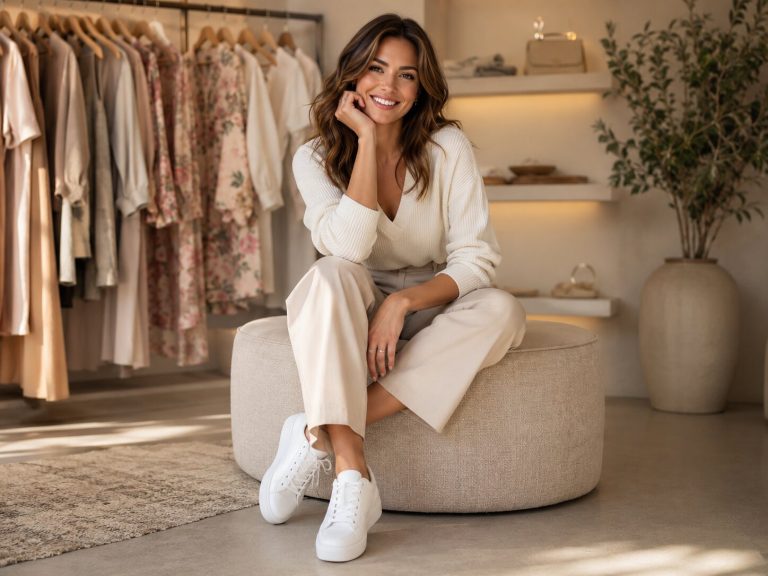
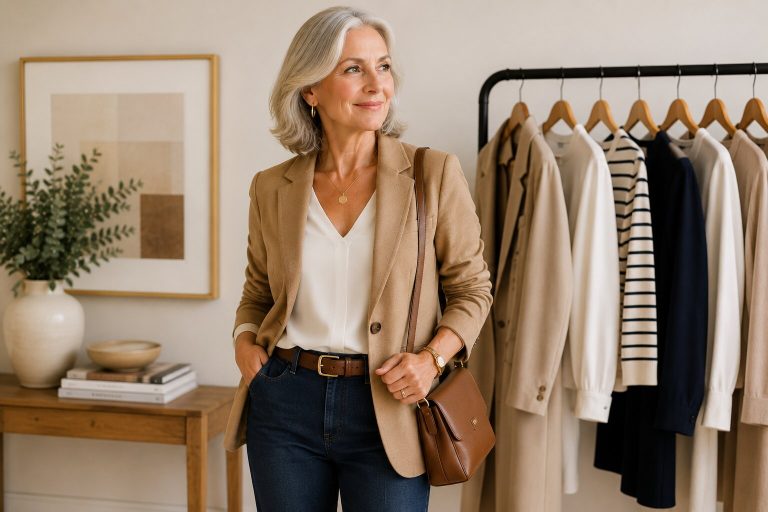
Learning how to dress for your body type should make shopping and styling feel easier, not more restrictive. The point is not to squeeze yourself into one perfect category or follow old-fashioned rules about what you “can” and “cannot” wear. It is about understanding your proportions, choosing clothes that sit well on your frame, and building outfits that make you feel comfortable, balanced, and confident.
Most women are a mixture of features. You might be petite with a fuller bust, tall with narrow hips, athletic with broader shoulders, or curvy with a straighter waist. Your body may also change over time, which means your wardrobe needs to be flexible rather than fixed.
The most useful body-type dressing advice starts with fit, proportion, fabric, and styling details. Once you know how those elements work together, you can make better decisions with dresses, jeans, jackets, skirts, tops, shoes, and accessories.
Start By Looking At Your Proportions
Before thinking about labels such as pear, apple, rectangle, hourglass, inverted triangle, or athletic, look at your actual proportions. Stand in front of a mirror in simple, fitted clothing and notice where your frame naturally has width, length, or shape.
Are your shoulders wider than your hips? Are your hips the fullest part of your body? Is your waist clearly defined, or are your shoulders, waist, and hips more similar in width? Do you have a shorter torso, longer legs, a petite frame, or a taller build?
These details matter because clothes create lines. A cropped jacket can shorten the torso or define the waist. Wide-leg trousers can balance a stronger shoulder line. A V-neck can open the upper body. A high waist can lengthen the legs. When you understand your proportions, you can use clothing to guide the eye in a way that feels natural.
If height and scale are part of your dressing challenge, a dedicated guide to fashion tips for petite women can sit alongside body-shape advice, especially when choosing hemlines, jacket lengths, and prints.
Dress For Balance, Not Perfection
Body-type dressing often gets talked about as if every outfit should create one ideal silhouette. In reality, balance is more useful than perfection. You do not need to make your body look like someone else’s. You simply want your outfit to feel considered.
If your shoulders are broader than your hips, you might create balance with softer tops and more movement on the lower half. If your hips are fuller, you might draw the eye upward with an open neckline, statement earrings, or a lighter top. If your waist is less defined, you might create shape with a belt, a wrap dress, or a tucked blouse.
Balance can also come from colour, texture, and accessories. A darker top with lighter trousers shifts attention downward. A printed blouse draws attention upward. A structured bag, long necklace, or pointed shoe can change the whole feel of an outfit without changing the clothes themselves.
Choose The Right Necklines
Necklines have a big effect on how clothing sits on different body types. The right neckline can open the chest, soften the shoulder line, lengthen the neck, or add shape to a simple outfit.
V-necks are helpful for many figures because they create a vertical line. Scoop necks and soft square necks can also be flattering, especially if you want a more open look without showing too much. Wrap tops are useful because they combine an open neckline with waist definition.
High necklines, boat necks, and wide crew necks can look chic, but they may make the upper body feel broader. This can be lovely on a pear-shaped figure that wants to balance fuller hips, but it may not be the first choice if you already feel wider through the shoulders.
For women who often find tops tricky because of shoulder width, a more specific guide to dressing broad shoulders can be helpful when choosing sleeves, necklines, and jackets.
Use Waist Definition Where It Helps
Waist definition is one of the easiest ways to change the shape of an outfit. It does not mean everything needs to be tight. It simply means giving the outfit a point of structure.
A defined waist can come from high-rise trousers, a tucked shirt, a wrap dress, a belted coat, a cropped cardigan, or a jacket that nips in slightly. Even a half-tuck can make a casual outfit look more polished.
For rectangle and athletic body types, waist detail can create more curve. For hourglass figures, it can highlight natural shape. For apple shapes, a soft empire line, open jacket, or dress that skims rather than clings may feel more comfortable than a tight belt.
The key is to choose the type of definition that suits you. Some women love a proper belt. Others prefer seam detail, ruching, draping, or layering that suggests shape without drawing too much attention to the middle.
Think Carefully About Fabric
Fabric can make a bigger difference than people realise. The same dress shape can look completely different in stiff cotton, soft jersey, satin, linen, denim, or crepe.
Structured fabrics are useful when you want clean lines. They work well for tailored trousers, blazers, shirt dresses, and coats. However, too much structure can feel boxy on strong frames or uncomfortable on curvier bodies.
Softer fabrics skim and move. They are useful for wrap dresses, blouses, midi skirts, relaxed trousers, and tops that need to sit gently over the bust or waist. Very clingy fabrics can be less forgiving, especially if they highlight every seam or waistband underneath.
When in doubt, look for fabric with a little weight and movement. It should not be so thin that it clings, but not so stiff that it stands away from the body.
Match Your Outfit Shape To Your Lifestyle
The best body-type advice still has to work for real life. A perfectly flattering outfit is not very useful if it feels too formal, uncomfortable, or unlike you.
If you work in an office, you might rely on tailored trousers, soft blouses, midi dresses, blazers, and loafers. If you are mostly casual, your wardrobe might need great jeans, relaxed knits, easy jackets, trainers, and simple dresses. If you attend weddings, parties, or family events often, you may want a reliable occasionwear formula that suits your shape.
For example, a pear-shaped figure might like a fit-and-flare dress with a beautiful neckline. An athletic body type might prefer a wrap dress, wide-leg trousers, or a soft blouse with relaxed tailoring. A rectangle shape might feel best in layered outfits with waist detail and texture. A petite woman might choose similar pieces but pay extra attention to length and scale.
Body-type dressing works best when it supports the life you actually live.
Learn Your Best Jacket Shapes
Jackets are powerful because they frame the body. They can add structure, define the waist, balance proportions, or make a very simple outfit feel complete.
If you have fuller hips, a jacket that ends above or below the widest point can be more flattering than one that stops exactly at it. If you have broad shoulders, look for softer tailoring, minimal padding, and open fronts. If you have a straighter figure, cropped jackets and belted styles can help create shape.
Longline blazers can look elegant, especially with slim trousers or straight-leg jeans. Cropped jackets can work beautifully with dresses and high-rise bottoms. Denim jackets, trench coats, and relaxed blazers are useful wardrobe pieces because they can be styled in many different ways.
Try jackets on with the clothes you actually wear most. A blazer that looks good over a thin top may not work over a jumper. A cropped jacket may look better with dresses than jeans. These practical details matter.
Use Accessories To Guide The Eye
Accessories are not just finishing touches. They can change the proportions of an outfit.
A long necklace creates a vertical line. A waist belt adds definition. Statement earrings draw attention to the face. A scarf can add softness around the neckline. A structured bag can make a casual outfit feel more polished.
Shoes matter too. Pointed flats, low heels, heeled boots, and shoes in a similar tone to your trousers can lengthen the leg line. Chunky shoes can add balance to wider trousers or fuller skirts. Trainers can make dresses feel more relaxed, but the shape and colour of the trainer still affect the outfit.
If you enjoy writing practical style advice like this, our contribute women’s fashion tips to Louie Boutique page is a natural place for approachable, reader-friendly fashion features.
Keep A Personal Style Formula
Once you know what works for your body type, create a few outfit formulas you can repeat. This makes dressing easier and helps you shop with more focus.
Your formula might be wide-leg trousers, a tucked blouse, and a soft blazer. It might be straight-leg jeans, a V-neck knit, and ankle boots. It might be a wrap dress, cropped jacket, and simple jewellery. It might be a midi skirt, fitted top, and trainers.
A formula is not a uniform. You can change the colour, fabric, print, shoe, or accessory while keeping the same flattering structure. This is how wardrobes become more wearable. You stop buying random pieces and start choosing items that work with what you already own.
Dress With Confidence And Flexibility
Your body type can guide your choices, but it should not control your wardrobe. Some days you may want balance and polish. Other days you may want comfort, drama, softness, colour, or ease. All of that is allowed.
The best way to dress for your body type is to pay attention to how clothes feel as well as how they look. Notice the cuts you keep reaching for. Notice the outfits that make you stand taller. Notice the pieces that never leave the wardrobe because something about the fit is not quite right.
Good style is built through those small observations. When you understand your proportions and choose clothes that work with them, getting dressed becomes calmer, quicker, and much more enjoyable.