Being petite sounds quite elegant, doesn’t it?
It has a certain ring to it. Light, refined, effortlessly stylish.
And then you try on a coat that looks like you borrowed it from someone a foot taller than you, jeans that gather around your ankles like they’ve given up halfway down your legs, and a dress where the waist sits somewhere around your hips… and suddenly it’s less “effortless” and more “why does nothing fit properly?”
This is the reality of petite dressing.
The good news? Once you understand how proportions work, it becomes much easier. You don’t need a completely different wardrobe — you just need to make your clothes work with your frame instead of against it.
What “Petite” Actually Means (And Why It Matters)
First things first — petite has nothing to do with weight or body shape.
It’s purely about height.
Typically, “petite” refers to women who are around 5’3” (160cm) and under.
That’s it.
The issue isn’t size — it’s that most clothing is designed with taller proportions in mind. So even if something technically “fits,” it often doesn’t sit in the right place.
You’ve probably noticed:
- sleeves that are too long
- waistlines that sit too low
- dresses that fall at awkward lengths
- trousers that bunch at the bottom
Individually, these don’t seem like a big deal. But together, they create an outfit that feels slightly… off.
And that’s what we’re fixing.
The Core Principle: It’s All About Proportion
Petite styling comes down to one simple idea:
👉 creating balance and length in your silhouette
You’re not trying to completely change how you look — you’re just avoiding anything that visually shortens or overwhelms your frame.
Once you get this right, everything else becomes much easier.
Fit Matters More Than Anything Else (Yes, Really)
This is where most outfits go wrong.
Even a great piece of clothing can look completely different depending on how it fits.
For petite women, poor fit tends to stand out more because there’s less room for error.
Things to look for:
- shoulders that sit correctly
- sleeves that don’t extend past your hands
- hems that don’t bunch up
- waistlines that sit where they should
If something feels slightly off in multiple areas, it probably is.
Tailoring: The Shortcut Most People Ignore
Here’s something that makes a huge difference but is often overlooked:
👉 tailoring
You don’t need to tailor everything, but small adjustments can completely transform how an outfit looks.
Shortening:
- sleeves
- trousers
- dress hems
…can take something from “almost right” to “perfect.”
And once you’ve seen the difference, it’s hard to ignore.
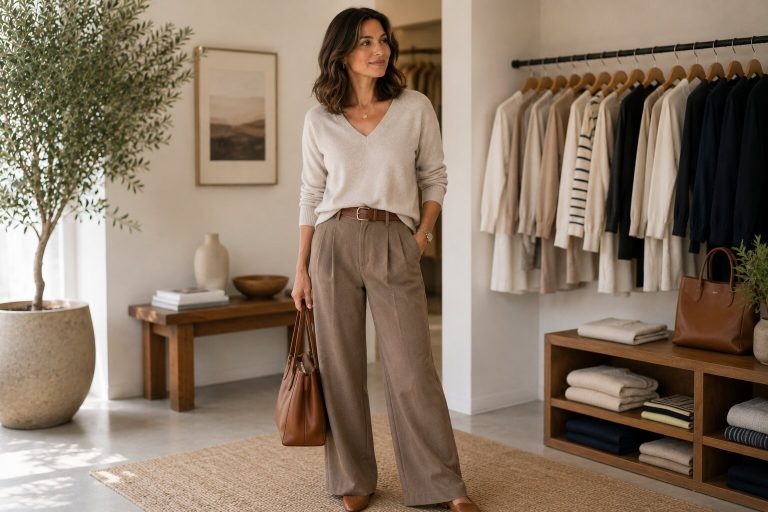
High-Waisted Styles: The Easiest Win
If there’s one change that makes an immediate difference, it’s this.
High-waisted trousers, skirts, and jeans:
- visually raise your waistline
- elongate your legs
- create a more balanced shape
They’re one of the simplest ways to improve proportions without overthinking it.
Low-rise styles, on the other hand, tend to shorten the leg line — which is usually not what you want.
The Power of Tucking (Small Change, Big Impact)
This sounds simple, but it works.
Tucking in your top — even slightly — helps define your waist and keeps your proportions clear.
Untucked tops can sometimes make your torso look longer and your legs shorter, especially if they’re slightly oversized.
A half-tuck or full tuck can fix this instantly.
Cropped Lengths: Very Useful (If Done Properly)
Cropped trousers and jeans can be incredibly flattering — if they hit the right point.
The ideal length is:
👉 just above the ankle
Too long, and they bunch up.
Too short, and they can cut your leg line awkwardly.
When they’re right, they create a clean, sharp line that actually makes your legs look longer.
Dresses: Getting the Length Right
Dress length is one of the biggest factors in how an outfit looks.
Safer options:
- above the knee
- just above the ankle (a well-fitted midi)
More difficult:
- mid-calf lengths
Mid-calf can visually shorten your legs if the proportions aren’t right.
That doesn’t mean avoiding midi dresses entirely — just make sure the fit and cut work for your height.
Monochrome Dressing: The Easiest Trick in the Book
Wearing one colour (or similar tones) from top to bottom creates a continuous line.
This has a surprisingly strong effect:
- it elongates your silhouette
- simplifies your outfit
- makes everything look more put together
And the best part? It requires almost no effort.
Vertical Lines and Details
Anything that draws the eye up and down helps create length.
Examples include:
- vertical stripes
- long necklaces
- open jackets or blazers
- button-down designs
These details guide the eye in a way that makes your overall look feel more elongated.
Layering Without Overwhelming Your Frame
Layering is useful — but it needs to be controlled.
Too much bulk can quickly overwhelm a smaller frame.
Instead of heavy layering, aim for:
- lightweight layers
- structured pieces
- shorter jackets
A cropped or waist-length jacket often works better than something long and oversized.
Oversized Clothing: Proceed Carefully
Oversized styles are popular, but they can be tricky.
The issue isn’t oversized clothing itself — it’s how it’s styled.
If everything is oversized, you can lose your shape entirely.
A better approach:
- balance one oversized piece with something more fitted
- keep proportions clear
- avoid excessive bulk
Shoes: Small Details, Big Difference
Shoes can subtly affect how tall (or not tall) you appear.
Helpful choices:
- shoes that match your outfit colour
- pointed toes
- low-cut fronts
Less helpful:
- ankle straps (they break the leg line)
- very chunky shoes
- heavy styles that feel out of proportion
It’s all about maintaining a clean line from top to bottom.
Belts: Use Them Thoughtfully
Belts can either help or hinder.
They’re great for defining your waist, but they can also visually cut your body in half.
To make them work:
- keep them slim
- match them to your outfit
- position them at your natural waist
Done right, they add structure without disrupting your proportions.
Prints and Patterns: Keep Them in Scale
Large prints can sometimes feel overwhelming on a smaller frame.
That doesn’t mean you have to avoid them — just choose patterns that feel proportionate.
Smaller or more subtle prints tend to work more easily.
Outerwear: One of the Trickiest Areas
Coats and jackets are where petite dressing gets particularly challenging.
Long coats can look great — but only if they’re well-fitted.
Things to look for:
- correct sleeve length
- defined shape
- not too much excess fabric
If a coat looks like it’s wearing you, rather than the other way around, it’s probably not the right fit.
Jeans and Trousers: Where Most Problems Start
Trousers are one of the most common problem areas.
Common issues:
- too long
- wrong rise
- awkward fit around the hips
High-waisted, well-fitted styles tend to work best.
And again — don’t underestimate the impact of a simple hem adjustment.
Confidence Still Matters (Even With All These Tips)
You can follow every guideline perfectly, but if something doesn’t feel right, it will show.
The goal isn’t to follow rules — it’s to make your wardrobe work better for you.
A Simple Outfit Formula That Works Every Time
If you want something reliable:
- high-waisted trousers or jeans
- a tucked-in or fitted top
- a structured jacket
- simple, well-chosen shoes
This creates clean lines and balanced proportions without overcomplicating anything.
The Key Takeaway
Petite fashion isn’t about limitation — it’s about understanding how to make clothes fit and flatter your own body shape.
Once you get the hang of proportions, everything becomes easier:
- shopping is less frustrating
- outfits come together more quickly
- and you spend far less time wondering why nothing quite works
Because when the fit is right, everything else follows.